Is HR Tech Undermining Your Strategy?

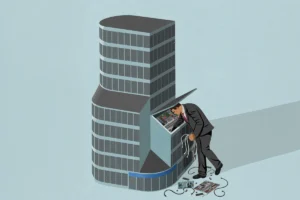
Modern human resources departments find themselves at a precarious crossroads, navigating a saturated market where cutting-edge technology is frequently mistaken for strategic capability. According to recent insights from workforce researchers Sharna Wiblen and Alexis Fink, organizations are increasingly falling victim to the "accumulation trap"—a phenomenon where companies hastily adopt disparate HR tech platforms to solve immediate, localized challenges, only to find their overarching talent management strategies undermined by default vendor settings.
The digital transformation of human resources was supposed to streamline operations, democratize workforce data, and empower leaders to make calculated, evidence-based decisions. Yet, industry data paints a starkly different picture. Despite the heavy investments pouring into enterprise software—highlighted by over 400 vendors showcasing AI-enabled offerings at industry showcases—a startlingly low percentage of both HR professionals and general employees view their corporate HR technology as genuinely effective. As organizations continue to scale remote and hybrid work models, understanding how to curate an intentional, strategy-first HR tech stack has never been more vital to enterprise survival.
The Proliferation Paradox: How Companies Fall Into the Accumulation Trap
To understand the current state of HR technology, one must look back at the historical evolution of enterprise software. Decades ago, human resources relied heavily on monolithic, on-premise Enterprise Resource Planning (ERP) systems. While often clunky, these systems forced a degree of enterprise-wide data centralization.
Fast forward to the contemporary workplace, and the landscape has fractured completely. Rather than utilizing a single, cohesive ecosystem, businesses today frequently maintain anywhere from 80 to hundreds of specialized point solutions spanning the entire employee life cycle. From applicant tracking systems (ATS) and employee engagement pulse-check tools to performance management suites and AI-driven resume screeners, the modern HR tech stack is a sprawling patchwork quilt.
This rapid, decentralized accumulation rarely stems from deliberate architectural design. Instead, individual department heads, regional managers, and HR leaders acquire tools reactively to patch immediate operational leaks. A recruiting team struggles to source engineering talent, so they purchase a specialized sourcing plugin. A regional executive wants better employee feedback, so they deploy a separate pulse-survey platform.
Over time, these point solutions multiply, creating data silos rather than the promised "single source of truth." More critically, every single platform introduced into the ecosystem arrives pre-configured with vendor defaults.
The Danger of Vendor Defaults: Fit for Sale vs. Fit for Purpose
Commercial HR software developers operate under a distinct set of business imperatives: scalability, repeatability, and broad market appeal. To maximize profitability, tech vendors design workflows, evaluation criteria, and reporting metrics that appeal to the lowest common denominator across diverse industries.

In short, commercial platforms are built to be fit for sale.
However, a thriving enterprise requires technology that is fit for purpose. When organizations lazily accept vendor defaults—whether in automated performance rating distributions, AI candidate-ranking algorithms, or internal mobility pathways—they inadvertently outsource their corporate culture and strategic priorities to third-party software companies.
The criteria embedded in these platforms are typically designed to work for a wide array of clients—including direct competitors. By defaulting to these standardizations, companies risk homogenizing their workforce practices, erasing their unique competitive advantages, and alienating employees who feel processed by algorithms rather than valued by leaders.
The Promise vs. Reality of Data-Driven Talent Management
The primary marketing pitch of modern HR technology vendors centers on three core pillars:
- The Single Source of Truth: Centralized, accessible workforce data that replaces fragmented spreadsheets and siloed human memory.
- Advanced Visibility: Real-time dashboards and reporting suites that offer instantaneous insights into workforce skills, productivity, and capability gaps.
- Standardized Best Practices: The embedding of standardized frameworks across business units, functional silos, and international geographies.
The logical framework sounds infallible. When leadership decisions are backed by structured processes and shared data, executives can theoretically pivot from gut-feeling judgments to precise, data-informed maneuvers.
Yet, the gap between this theoretical promise and operational reality remains stubbornly wide. When organizations accumulate dozens of disconnected platforms, each operating on its own default logic, the data becomes polluted. Instead of gaining a unified view of talent, executives find themselves drowning in conflicting metrics. A high performer identified in the learning management system might be flagged as a retention risk in the engagement platform, while the core HRIS remains completely unaware of both signals.
Formulating a Strategy-First Approach
To reverse this trajectory, Wiblen and Fink advocate for a rigorous, deliberate recalibration of the HR technology ecosystem. Organizations must stop letting software vendors dictate how they view, manage, and develop their people.
Aligning enterprise systems with overarching business strategy requires deliberate intervention. Leadership teams must evaluate whether their current digital architecture genuinely reflects their unique organizational values, or if it merely automates generic, off-the-shelf processes.
Implementing the Four-Step Strategy-First Check-In
To rescue talent management priorities from the clutches of vendor defaults, organizations should utilize a structured, four-step evaluation process:
-
Audit and Inventory the Tech Landscape
Begin by mapping out every single HR technology platform currently active within the organization. Beyond major enterprise systems, account for the rogue point solutions purchased by localized business units. Quantify the exact number of tools touching the employee life cycle and identify where data overlaps or contradicts itself. -
Interrogate Vendor Defaults
For every core platform, scrutinize the default settings, built-in analytics, and automated workflows. Ask critical questions: Does this workflow reflect our unique corporate strategy, or does it simply mimic standard industry practice? Are our AI screening tools amplifying our biases or reinforcing our specific talent criteria? -
Re-center on Organizational Strategy
Establish clear, unambiguous talent priorities derived directly from the corporate business plan. Whether the strategic imperative is rapid scaling, deep technical innovation, or operational efficiency, every piece of technology in the HR stack must be explicitly tied to advancing that specific goal. If a tool does not directly serve the strategy, consider deprecating or integrating it. -
Redesign for Human-Centric Governance
Technology should illuminate human decision-making, not replace it entirely. Form a cross-functional governance committee comprising HR leaders, IT architects, and business unit heads. This group must review tech acquisitions collectively, ensuring that future platform integrations adhere strictly to organizational design principles rather than opportunistic vendor sales pitches.
Broader Implications and Future Outlook
The maturation of the HR technology market—accelerated by the rapid integration of artificial intelligence and machine learning—makes this strategic audit more urgent than ever. As automated systems take on heavier responsibilities in hiring, compensation planning, and succession mapping, the stakes for getting the underlying architecture right have risen exponentially.
Organizations that fail to curate their HR tech stacks risk creating a hollowed-out employee experience where workers feel managed by opaque algorithms rather than strategic leaders. Conversely, companies that take deliberate control of their digital ecosystems will unlock the true potential of their workforce, turning technology from an administrative burden into a genuine driver of competitive advantage.
Ultimately, technology must remain a servant to strategy, never its master. By breaking free from the accumulation trap and rejecting lazy vendor defaults, modern enterprises can finally bridge the gap between technological investment and meaningful, sustainable talent success.