Rorra and the High-End Filtration Pivot: Why Founders Are Betting Consumers Will Pay $249 for a Pitcher

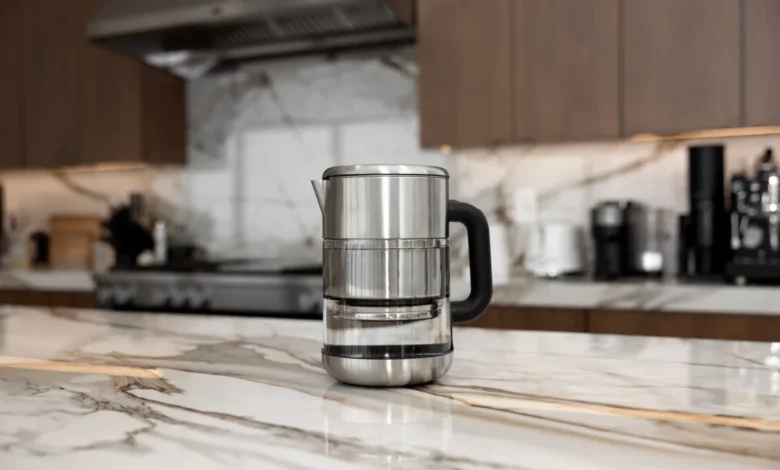
The household water filtration market is historically characterized by low-cost, disposable plastic pitchers that retail for between $20 and $40. It is a sector defined by thin margins, high-frequency filter replacements, and a commoditized aesthetic. However, Rorra, an Austin-based startup founded by Brian Keller and Charlie Carlisle, is attempting to disrupt this paradigm by introducing a premium $249 borosilicate glass and stainless steel filtration pitcher. This move represents a strategic leap from the company’s origins as a countertop filtration manufacturer to a broader lifestyle brand, testing the upper limits of consumer price sensitivity in the home goods space.
The Genesis of Rorra: From Apparel to Infrastructure
The trajectory of Rorra is deeply rooted in the prior professional experiences of its founders. Brian Keller and Charlie Carlisle previously served as key figures at Love Your Melon, an apparel brand that achieved significant market penetration and brand loyalty through a social-impact business model. Their experience in scaling a direct-to-consumer (DTC) brand provided them with the foundational knowledge of supply chain management, customer acquisition costs, and brand storytelling.
However, the transition from soft goods to hardware presented a steep learning curve. The founders spent nearly two years in a development phase, operating without revenue while navigating the complexities of industrial design and engineering. This period was marked by significant capital risk and technical hurdles. One notable early design iteration for their flagship countertop system was significantly larger than the final product, which the founders internally dubbed a "Stanley Cup-looking thing."
The development timeline was further complicated by engineering delays that forced the founders to recalibrate their business model mid-stream. When their engineering partners indicated that the product required an additional three to four months of refinement, Keller and Carlisle were forced to "remodel the whole business" to ensure liquidity would sustain them through the extended pre-launch period. This resilience paid off, as the company reported eight-figure sales in its inaugural year, a testament to the pent-up demand for high-end home infrastructure.
The Case for Premiumization: Durability and Health
The $249 price point is intentionally provocative. In an era where "fast furniture" and disposable household goods are the norm, Rorra is marketing a return to mid-century durability. According to Carlisle, the goal is to foster a "self-serviceable culture" reminiscent of 1950s household appliances, which were engineered to last for decades.
The technical specifications of the new pitcher are designed to justify this investment. By utilizing borosilicate glass and medical-grade stainless steel, the company has eliminated the use of plastics that typically come into contact with filtered water. Beyond the material build, the filtration efficacy is a core value proposition. The system is designed to reduce the presence of per- and polyfluoroalkyl substances (PFAS)—often referred to as "forever chemicals"—along with lead, microplastics, and a wide array of other common contaminants. The filter is rated for 200 gallons, positioning it as a long-term utility rather than a seasonal purchase.
Leveraging AI for Strategic Validation
A compelling aspect of Rorra’s recent product launch is the company’s unconventional use of artificial intelligence to refine its go-to-market strategy. Rather than using AI as a tool for brainstorming or content generation, Keller utilized it as a "red team" adversary. By inputting his comprehensive launch plan into an AI model and framing the scenario as a catastrophic failure, he sought to identify blind spots in his logic.

The AI’s feedback proved to be highly actionable. It flagged the company’s brand equity as insufficient to support an extended, high-intensity pre-launch campaign and suggested that the marketing narrative was too cluttered with competing value propositions. By streamlining the message and condensing the pre-launch window, Rorra successfully sold out its initial inventory. This methodology suggests a shift in how modern startups might use generative tools to mitigate risk before deploying significant marketing capital.
Industry Context and Market Dynamics
The water filtration market is currently experiencing a period of significant growth, fueled by increasing public awareness regarding water quality and the toxicity of legacy infrastructure. According to market research, the global water purifier market is projected to grow at a compound annual growth rate (CAGR) of roughly 8% over the next several years. While the bulk of this market remains dominated by budget-friendly pitchers and under-sink reverse osmosis systems, there is a visible trend toward premium, aesthetic-forward kitchen appliances.
Rorra’s expansion into a portable pitcher format is a strategic attempt to capture the "on-the-go" demographic. The founders argue that current market fragmentation creates a disconnect: consumers may use a high-end filtration system at home but are forced to rely on low-quality filtered water—or worse, bottled water—at the gym or the airport. By attempting to build an integrated platform that transcends these environments, Rorra is positioning itself to become a ubiquitous presence in the customer’s daily routine.
Scaling Challenges and the "20 to 50 Million" Trap
As Rorra moves its headquarters to Austin and begins to expand its team, it faces the classic "founder’s trap." Keller has publicly noted his awareness of the dangerous growth phase that occurs when a company reaches between $20 million and $50 million in annual revenue. This stage is frequently where organizational structure, culture, and operational speed begin to clash.
To navigate this, the company is transitioning from a fully remote team to a centralized model. The founders believe that in-person collaboration is essential for the level of innovation required to maintain their current momentum. Maintaining the "speed of a startup" while building the bureaucratic infrastructure necessary for a mid-market company is the primary challenge facing Keller and Carlisle.
The Path Forward
The $249 pitcher serves as a litmus test for the brand’s long-term sustainability. If the product succeeds, it will prove that the premium filtration segment is not a niche anomaly but a viable, high-margin category. If it fails to resonate, it will serve as a cautionary tale regarding the limitations of luxury branding in the utility sector.
From a broader economic perspective, Rorra’s trajectory highlights a significant shift in consumer behavior: a growing willingness to invest in high-cost, high-durability items that promise long-term health benefits. Whether this trend is sufficient to carry a company to the next tier of the market remains to be seen. As of October, the second production batch is scheduled to ship, providing the first real data point on whether the market is truly ready to embrace a "premium" water pitcher. For now, the founders remain focused on the dual task of scaling their internal operations and proving that their engineering-first approach can redefine the standard for the American kitchen.