Mark Rober Shares His Ultimate Strategy for Beating AI Slop on YouTube and Beyond

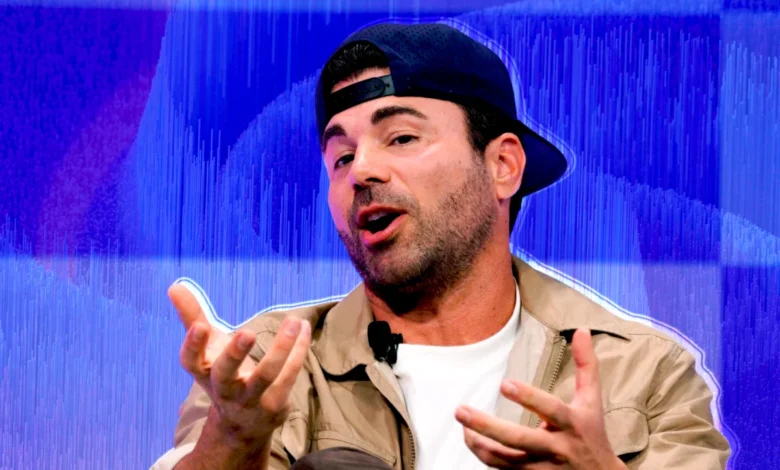
The digital content ecosystem is undergoing a seismic transformation. As generative artificial intelligence tools democratize video production, the sheer volume of digital media is exploding. Yet, this democratization has introduced a paradox for content creators: while tools are becoming cheaper and easier to use, individual human creators are finding it increasingly difficult to stand out from an endless tide of low-quality, automated content often referred to as "AI slop." Amidst this shifting landscape, former NASA engineer turned premier science communicator Mark Rober has articulated a distinct philosophy for survival. With an astonishing 85.7 million subscribers on YouTube and a thriving enterprise that extends far beyond the screen, Rober argues that the ultimate antidote to artificial intelligence is uncompromisingly authentic, real-world execution.
The Rise of a Science Icon
Mark Rober’s journey to becoming one of the most recognizable and influential creators on the internet is a masterclass in blending rigorous technical education with mainstream entertainment. Before captivating hundreds of millions of viewers with high-concept engineering feats, Rober spent nearly a decade working as a mechanical engineer for NASA, where he notably contributed to the Curiosity rover project sent to Mars. This formidable scientific pedigree provided the foundation for a digital career defined by scale, curiosity, and jaw-dropping visual proof.
Rober transitioned to YouTube full-time after realizing the immense potential of using digital platforms to make science accessible and fun for the masses. His early viral successes established a blueprint for high-production-value educational entertainment. Videos such as "How to Survive a Grenade Blast," which has amassed over 100 million views, and "Can you swim in Jello?", which pulled in a staggering 224 million views, showcased his unique ability to answer absurd, scientifically grounded questions with real-world physics. Over the years, his channel evolved from simple backyard demonstrations into elaborate global philanthropic campaigns, such as Team Trees and Team Seas, and complex engineering operations designed to combat porch pirates.
Today, Rober’s digital footprint generates millions of dollars annually. In the previous year alone, his primary YouTube channel generated roughly $17 million in revenue, a figure that largely mirrors the capital-intensive cost of producing his cinematic, highly collaborative experiments. However, Rober’s professional ambitions extend well beyond ad-sense monetization. He is the founder and CEO of CrunchLabs, a rapidly expanding educational technology and toy company that designs maker kits intended to introduce children and young adults to fundamental engineering and scientific principles. The venture has experienced exponential growth, currently employing more than 200 people whose collective mission centers on fostering lifelong curiosity.
The AI Paradox: Efficiency Versus Authenticity
In a comprehensive interview with Business Insider, Rober addressed the elephant in the room for modern content creators: the rapid infiltration of generative artificial intelligence across social media platforms. The proliferation of tools capable of generating hyper-realistic video, automated voiceovers, and complex animations in seconds has created a bifurcated reality for digital media.
On one hand, AI offers unprecedented efficiency and global reach. For instance, startups like Linguana have successfully capitalized on this wave by utilizing AI dubbing and automated localization to help top YouTubers translate their existing content into multiple languages. By automatically generating localized audio tracks, translated thumbnails, and optimized descriptions, these services allow creators to expand into international markets without the exorbitant costs and time commitments of traditional localization studios. In April 2025, Linguana reported managing upwards of 10,000 video translations per month for hundreds of prominent creators under revenue-sharing models that take a percentage of the newly unlocked international earnings.
Conversely, this lowering barrier to entry has triggered a deluge of commoditized media. Rober warns that as tools like OpenAI’s Sora and various automated video generation suites become ubiquitous, technical execution alone will rapidly plummet in value. Channels that rely exclusively on formulaic editing, anonymous narration, or standard digital animations face an existential threat. When anyone can generate a visually slick video in minutes, the novelty of standard visual effects evaporates.
Rober’s Defensive Moat: Reality and the Human Element
To combat the rising tide of automated mediocrity, Rober advocates for a strategic pivot toward what AI cannot replicate: physical reality, tangible stakes, and authentic human personality.
"Do you want to see a simulation of someone dunking a basketball with a sick trick, or do you want to see someone actually do it?" Rober remarked during his interview. "The fact that you know it’s real is what makes it crazy."
This philosophy underpins what Rober describes as his personal "moat" on YouTube. While algorithms can synthesize infinite variations of digital imagery, they cannot experience the physical friction, unpredictable environmental variables, and genuine emotional stakes of conducting a massive, real-world experiment. When Rober spends months engineering a giant squirrel obstacle course or testing whether a shark can smell a single drop of blood in an Olympic-sized swimming pool, the viewer’s engagement is tethered to the authenticity of the endeavor. The audience knows that failure carries real-world consequences, and that triumph is the result of genuine human perseverance.
Furthermore, Rober emphasizes that a recognizable human personality and a transparent creative journey serve as powerful shields against the commoditization of content. In an era where viewers are increasingly skeptical of digital provenance, the personal brand of the creator—their quirks, their enthusiasm, and their visible passion for discovery—becomes the primary value proposition.
The Broader Implications for the Creator Economy
Rober’s perspective offers a vital economic lens through which to view the future of digital entrepreneurship. As mainstream platforms like YouTube continue to rival and surpass traditional media conglomerates in advertising revenue—often outperforming legacy television networks in key demographic engagement—the competition for consumer attention is fiercer than ever.
Industry analysts suggest that the rise of AI will force a structural maturation of the creator economy. Creators who operate purely as media arbitrageurs—churning out low-effort compilation videos or unoriginal commentary powered by automated tools—will likely experience margin compression as platforms adjust algorithms to favor original, high-retention content. Meanwhile, creators who build physical businesses, intellectual property, and deeply engaged communities around their personal brands will find themselves insulated from technological disruption.
This philosophy is mirrored in CrunchLabs. By moving physical products into the hands of consumers, Rober has diversified his enterprise away from pure digital ad-revenue dependence. The company’s focus on maker kits bridges the gap between digital inspiration and physical execution, teaching problem-solving skills that machines cannot easily replicate.
Cultivating the Ultimate Human Skill: Curiosity
As artificial intelligence reshapes the global labor market—impacting everything from entry-level freelancing to complex content creation—Rober believes that the most critical trait for the future is not technical mastery of a specific software suite, but rather an unquenchable desire to learn.
"Curiosity is so important in this new age of AI," Rober noted. "It means you just have a lifetime of learning."
In Rober’s view, AI-powered tools should ideally free humans from the mundane, mechanical aspects of production, allowing them to focus on higher-order creative problem-solving. However, this transition requires a fundamental shift in how individuals approach education and career development. Rather than competing with machines on speed and scale, humans must lean into the messy, unpredictable, and deeply human pursuit of asking questions and testing answers in the physical world.
As social media navigates its next great technological frontier, Mark Rober stands as a testament to the enduring power of substance over simulation. By betting on the undeniable appeal of real-world physics, genuine human stakes, and tangible educational products, he has mapped out a sustainable path forward not just for science communicators, but for the entire generation of digital entrepreneurs seeking to thrive in the age of artificial intelligence.
Related posts: