Espionage Allegations Involving Nvidia CEO Jensen Huang and Chinese Intelligence Agencies Raise Geopolitical Concerns

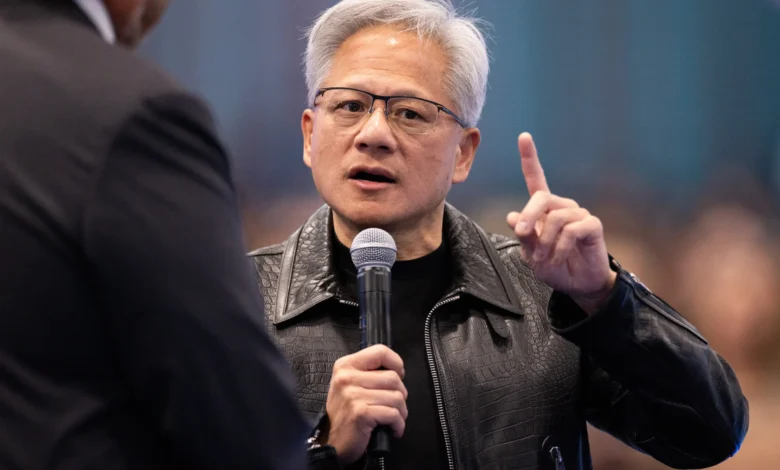
A classified intelligence memo circulated earlier this year has cast a shadow over the upper echelons of the semiconductor industry, alleging that technology executive Alice Huang was recruited by China’s Ministry of State Security (MSS) to conduct espionage against Nvidia CEO Jensen Huang. The revelation, first brought to light by The New York Times and further detailed by The Financial Times, underscores the intensifying friction between the U.S. technology sector and Chinese intelligence apparatuses as global competition for AI dominance reaches a fever pitch.
The Intelligence Memo and the Allegations
The core of the controversy stems from a government-circulated internal memo, which reportedly drew upon U.S. intelligence gathering to outline a sophisticated influence operation. The document claims that Alice Huang, an executive associated with the Singapore-based firm Megaspeed, was utilized by the Chinese state to target the Nvidia chief.
While the exact mechanics of the alleged recruitment remain shrouded in the secrecy of intelligence classification, subsequent reporting has added a layer of personal complexity to the national security concern. According to sources cited by The Financial Times, the memo further alleged that a romantic relationship existed between Jensen Huang and Alice Huang. This personal connection, if confirmed to be an instrument of statecraft, would represent a significant breach of the security protocols typically surrounding the leadership of a company as critical to the global economy as Nvidia.
Nvidia’s leadership has moved swiftly to address the fallout, though they have maintained a measured stance. A spokesperson for the company, when pressed for comment regarding the interactions between the CEO and the executive in question, described the meetings as “not unusual” given the nature of the global semiconductor market. The company further emphasized that it maintains stringent firewalls regarding proprietary information, explicitly stating that Nvidia does not share classified or sensitive trade secrets with its customers, regardless of their international affiliations.
A Chronology of Rising Tensions
The emergence of this memo does not exist in a vacuum. It is the latest chapter in a multi-year narrative of escalating trade restrictions and industrial espionage concerns between Washington and Beijing.
- Early 2026: Internal U.S. government assessments begin to track increased activity by Chinese intelligence entities targeting American AI and semiconductor executives.
- Mid-2026: Intelligence reports, including the memo in question, are shared with relevant stakeholders as part of an effort to harden the security of top U.S. technology firms.
- November 6, 2026: The New York Times breaks the story, confirming that U.S. intelligence agencies identified Jensen Huang as a specific target of Chinese intelligence efforts.
- November 7, 2026: Further reporting reveals the specific identity of the alleged operative, Alice Huang, and the nature of the claims regarding her relationship with the Nvidia CEO.
This timeline reflects a broader pattern of "gray zone" activities, where state actors utilize corporate intermediaries and personal relationships to gain insights into the developmental roadmaps of companies like Nvidia, whose H100 and Blackwell-class GPUs are the essential hardware backbone of the global artificial intelligence boom.
The "Hollow Shell" Phenomenon: Supply Chain Risks
Beyond the personal allegations, the security of Nvidia’s supply chain has come under intense scrutiny. A secondary report from The New York Times has highlighted the difficulty the U.S. Commerce Department faces in enforcing export controls.
The investigation focused on "New Matrix," a Chinese firm that had been granted official authorization by the U.S. government to purchase advanced Nvidia chips. However, upon arrival at the company’s registered office address in China, journalists discovered only a "hollow gray shell." The absence of any legitimate operational infrastructure suggests that New Matrix may have been a front company—a common tactic used to bypass export bans and divert high-end technology into the hands of blacklisted private equity firms or military-linked research centers.

This incident highlights the systemic challenges in tracking end-users in a complex, multi-tiered global supply chain. For Nvidia, this represents a significant compliance burden. The company has repeatedly stated its commitment to adhering to all U.S. export regulations, noting that its primary objective is to supply the "first, best, and most" of its technology to the American market, while strictly observing the limitations placed upon exports to regions of geopolitical concern.
Data and Market Implications
The stakes for Nvidia are unprecedented. As of late 2026, the company remains the world’s most valuable chipmaker, with its market capitalization largely tethered to the explosive growth of generative AI.
- Market Dependency: Over 20% of Nvidia’s revenue historically originated from the Chinese market prior to the implementation of the most stringent U.S. export controls in late 2022 and subsequent updates.
- Regulatory Friction: The U.S. government has expanded its definition of "advanced chips," forcing companies like Nvidia to create "lite" versions of their hardware for the Chinese market. These variants are designed to comply with performance ceilings set by the Department of Commerce.
- The Espionage Risk: Analysts suggest that for a company holding the "keys to the kingdom" of AI, every executive interaction is a potential security vulnerability. The cost of a successful breach—whether it involves intellectual property theft or influence operations—could involve not just billions in valuation, but the compromise of national security infrastructure.
Analysis: The New Reality of Corporate Leadership
The intersection of corporate leadership and international espionage is no longer limited to legacy defense contractors. In the current era, the CEO of a company like Nvidia functions as a geopolitical figure, effectively a central player in the "Silicon Curtain" that has descended between the world’s two largest economies.
The allegation against Alice Huang and the subsequent questions surrounding the "New Matrix" front company serve as a stark reminder that the semiconductor industry is the new battlefield. For firms like Nvidia, the challenge is twofold: they must maintain the global scale required to fund the immense R&D costs of next-generation silicon while simultaneously operating under a security profile that mirrors that of a national defense agency.
Industry experts observe that this will likely lead to an era of "hardened leadership." This includes increased scrutiny of the personal and professional networks of executives, more rigid vetting of international clients, and a shift toward "friend-shoring" supply chains to avoid the pitfalls of dealing with entities that may be fronts for foreign intelligence services.
Official Responses and Future Outlook
As of this writing, there have been no formal charges filed against any parties mentioned in the intelligence memo. The U.S. government has remained largely tight-lipped, citing the sensitive nature of intelligence sources and methods.
Nvidia, meanwhile, continues to balance its role as a global technology leader with its obligations to U.S. national security. By consistently iterating its product line to meet the demands of regulators, the company is attempting to insulate itself from the volatility of U.S.-China relations. However, the persistence of these intelligence reports suggests that even with the best compliance systems in place, the company remains a primary target for actors seeking to close the AI gap.
Investors and policymakers are now looking toward the upcoming quarterly earnings call and potential follow-up actions by the Department of Commerce. Whether these allegations will lead to a broader inquiry into corporate governance standards for tech executives remains a subject of intense debate in Washington. For now, the story serves as a critical case study in how the lines between commerce, statecraft, and espionage have become inextricably blurred in the age of artificial intelligence.