The Strategic Blueprint for Scaling B2B Podcasts and Converting Listeners into Business Assets

Launching a podcast in the current digital landscape is a relatively straightforward technical endeavor. With the proliferation of hosting platforms and distribution networks, a brand can go from concept to a live RSS feed in a matter of hours. However, the true challenge for modern B2B organizations lies not in the act of publishing, but in the sustained acquisition of a dedicated, high-value audience. As the podcasting medium matures, the focus for business-to-business enterprises has shifted from raw download metrics to the quality of engagement and the tangible influence a show exerts on a brand’s commercial pipeline.
According to the 2025 Infinite Dial report from Edison Research, 55% of Americans aged 12 and older have listened to a podcast within the past month. This statistic confirms that podcasting is no longer an emerging niche but a pillar of mainstream media consumption. For B2B brands, however, the sheer size of the total addressable market is secondary to the relevance of the audience. A podcast that reaches 10,000 casual listeners offers less commercial utility than one that reaches 500 targeted decision-makers—such as C-suite executives, procurement leads, or industry influencers—who possess the authority to initiate business partnerships or purchase cycles.
The evolution of professional podcasting necessitates a departure from the "post-and-pray" methodology. Organizations that treat each episode as a standalone event often struggle with inconsistent growth. Conversely, those that treat their podcast as an integrated media asset, woven into the broader fabric of their marketing and sales strategy, see significantly higher returns on their production investment.
Defining Growth Beyond Vanity Metrics
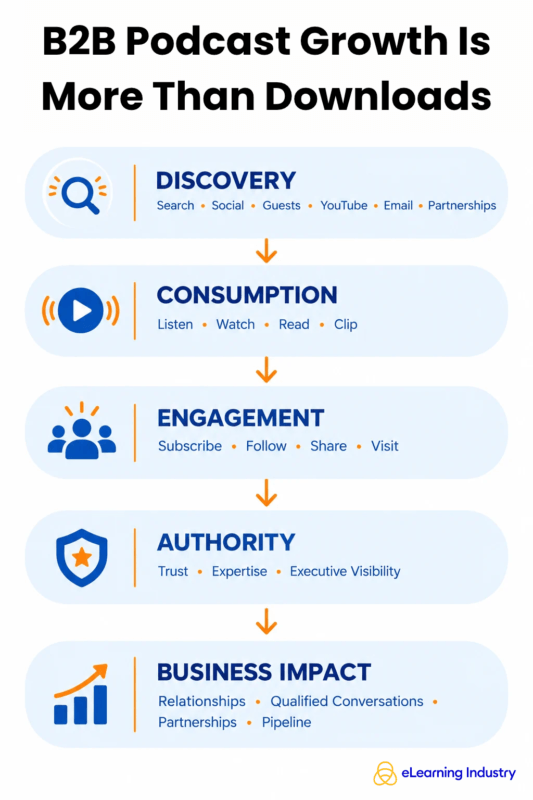
The fundamental shift in B2B podcasting involves redefining success. If an organization measures growth solely through aggregate downloads, it risks prioritizing quantity over the quality of the lead. A robust strategy requires aligning podcast output with specific organizational objectives, such as strengthening brand authority, facilitating executive networking, or shortening the sales cycle for high-value accounts.
Consider the disparity in value between two hypothetical shows: one with 20,000 broad-reach downloads and another with 1,500 highly segmented downloads. If the latter consists of 150 target account executives, it becomes a high-octane engine for account-based marketing (ABM). In this context, the metrics that matter are not just the total listens, but the retention rates, the number of qualified leads derived from the show, and the depth of engagement with the brand’s ecosystem post-listen.
Strategic Pillars for Audience Development
To transition from a static audio feed to a growth-oriented media property, brands must adopt a multi-channel distribution architecture. This framework relies on several core pillars.
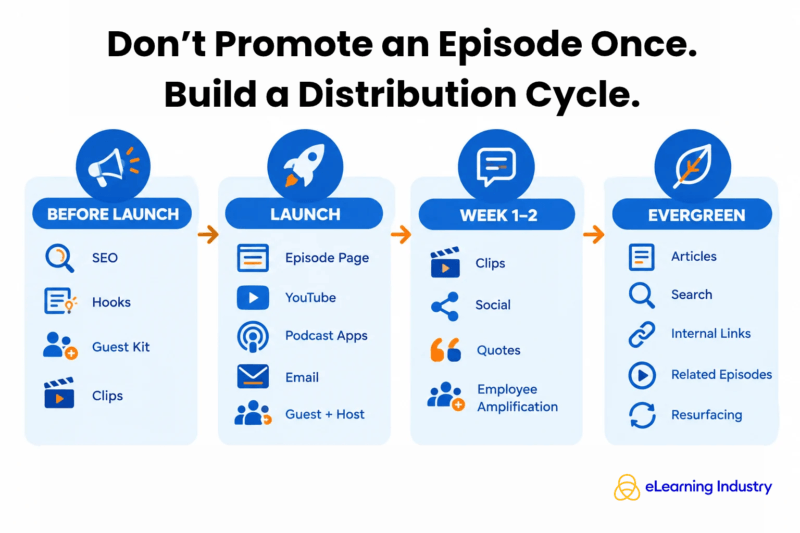
Search Engine Optimization (SEO) remains a critical, yet often overlooked, component of podcast discovery. By treating each episode as a high-intent landing page, brands can capture organic traffic from search engines. This involves crafting titles that address specific industry pain points rather than generic interview headers, providing detailed show notes, and publishing accurate, keyword-rich transcripts. When a potential buyer searches for a solution to an enterprise-level problem, an optimized podcast page should be among the top results.
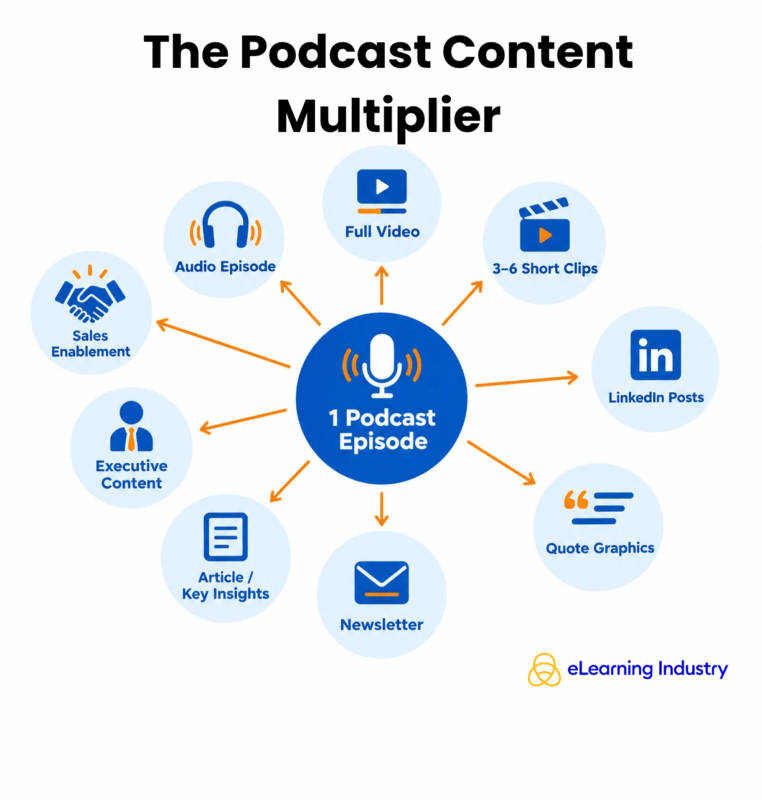
Content repurposing serves as the "force multiplier" for any B2B show. A single 45-minute conversation with an industry expert can be distilled into a long-form article, three to five short-form video clips for social platforms like LinkedIn, a segment for a corporate newsletter, and a series of quote graphics. By diversifying the medium, brands meet their audience where they are—whether that is in a quiet office reading an article or scrolling through a mobile feed during a commute.
The Role of Guest Collaboration and Advocacy
The most successful B2B podcasts leverage the professional networks of their guests. Rather than asking guests to share a link as an afterthought, organizations should provide a curated "promotional kit." This kit includes pre-formatted, high-quality video clips, custom graphics, and draft copy that the guest can easily share within their own professional circles. This not only eases the burden on the guest but ensures the content aligns with the brand’s voice while tapping into established communities of influence.
Furthermore, internal employee advocacy is a potent, underutilized lever. When team members—from sales to product development—share episodes that relate to their specific domains, it lends a sense of authenticity to the promotion. A sales representative sharing a link with a prospect, accompanied by a personal note about how the episode addresses a current challenge, is significantly more effective than a broadcast post from a corporate handle.
Technical and Editorial Best Practices
The production lifecycle must be as disciplined as the distribution process. Before a single episode is recorded, the target audience must be clearly defined. A show aimed at "business professionals" is far too broad. Instead, a targeted show for "Chief Information Officers in the fintech space" allows for hyper-relevant content that naturally attracts a loyal following.
Video has also become an indispensable component of the modern podcasting stack. Publishing full episodes on YouTube satisfies the preference of audiences who wish to watch as well as listen. Furthermore, YouTube’s algorithmic discovery mechanisms—when paired with proper tagging and chaptering—can drive significant top-of-funnel awareness.
Data-Driven Optimization and Long-Term Sustainability
Success in podcasting is an iterative process. By monitoring audience retention data, brands can identify the exact points where listeners drop off and adjust their pacing or structure accordingly. If data indicates that listeners are consistently engaging with specific topics, the editorial calendar should be recalibrated to double down on those themes.
Common pitfalls, such as failing to establish a consistent publishing cadence or relying on low-quality audio, can alienate an audience before a brand has the chance to establish trust. To mitigate these risks, organizations should treat their podcast with the same rigor as a product launch. This includes documenting standard operating procedures (SOPs) for every stage of production, from guest booking and script outlining to post-production editing and multi-channel promotion.
Implications for B2B Brand Authority
The ultimate outcome of a well-executed podcast strategy is the accumulation of "authority equity." In competitive B2B sectors, trust is the primary currency. By hosting a consistent, high-value conversation, an organization positions itself as a thought leader rather than a mere service provider. Over time, this shifts the relationship between the brand and the market; the company is no longer just selling a solution, but defining the discourse around the problems their customers face.
Furthermore, as generative AI continues to change the landscape of search, the importance of "first-party expert content" is rising. AI models are increasingly scraping and citing high-quality, long-form content to provide answers to user queries. By producing authoritative, original content via a podcast and its supporting transcripts, brands ensure they are the primary sources of truth in their respective industries, potentially increasing their visibility in AI-driven search results.
Conclusion: A Commitment to Long-Term Value
Building a B2B podcast is not a sprint; it is an infrastructure project. It requires a commitment to quality, a strategy for discoverability, and a willingness to measure outcomes based on business impact rather than vanity metrics. When integrated into a company’s broader marketing and sales ecosystem, a podcast becomes more than just a media channel—it becomes a foundational asset that facilitates deeper relationships, establishes industry authority, and provides a continuous stream of insights that can be leveraged across the entire business.
As the industry moves forward, the divide between stagnant podcasts and thriving media properties will widen. Organizations that adopt a deliberate, process-driven approach to their podcasting efforts will find that they are not just capturing attention, but building a sustainable pipeline of influence that compounds over time. Whether the goal is to drive sales, improve retention, or lead the market in innovation, the strategic use of audio and video content is, without question, one of the most effective ways to command attention in an increasingly crowded digital landscape.