Workforce Maturity Model: From Administrative Hiring to Strategic Capability Architecture

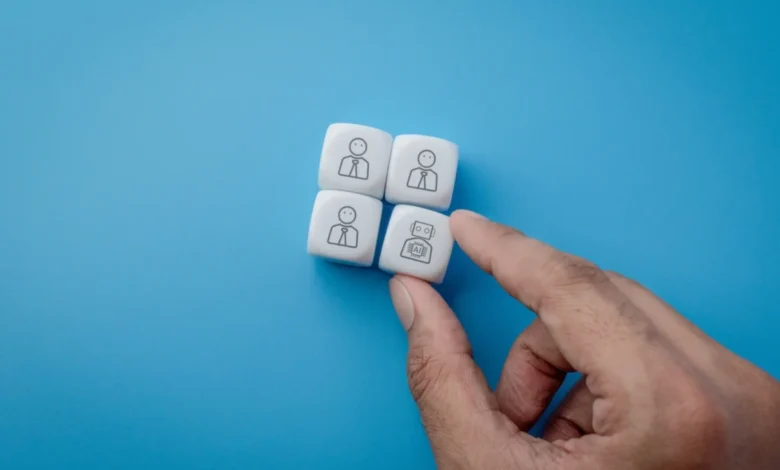
Most organizational workforce planning efforts are little more than glorified hiring forecasts, failing to bridge the widening gap between human capital needs and long-term business strategy. In many enterprises, the disconnect between what leadership requests and what Learning and Development (L&D) departments deliver results in a critical erosion of departmental credibility. By utilizing the Workforce Maturity Model, organizations can transition from a transactional model of simply filling seats to a sophisticated architecture that builds sustainable, future-proof workforce capability.
The Evolution of Strategic Workforce Planning
The history of corporate workforce planning has traditionally been bifurcated: Finance controls the budget and headcount projections, while Human Resources and L&D manage the training catalogs and onboarding pipelines. This operational silo frequently leads to a "hiring first, strategy later" mentality. Research indicates that organizations lacking a unified workforce strategy often struggle with high turnover rates and a lack of role-specific agility. According to recent industry benchmarks, companies that align their L&D initiatives with specific business-critical capabilities report a 22% higher retention rate for high-potential talent compared to those operating in reactive, administrative modes.
The Workforce Maturity Model serves as a diagnostic framework for identifying exactly where an organization currently stands on the spectrum of operational effectiveness. By evaluating six core dimensions—planning horizon, data usage, strategy linkage, sourcing discipline, succession planning, and decision rights—leaders can move beyond anecdotal evidence and toward empirical assessment.
Stage 1: The Reactive Foundation
At the baseline of the maturity model, the organization functions in a state of constant reaction. In this phase, "workforce planning" is synonymous with filling open requisitions as they arise. L&D acts as an order-taker, responding to training requests as if they were service tickets with immediate deadlines.
The primary failure mode here is "speed without direction." Organizations at this stage prioritize the velocity of hiring over the strategic necessity of the roles being filled. Because strategy and staffing are discussed in separate boardrooms, the organization often finds itself staffing for the previous year’s organizational chart rather than anticipating the requirements of the next market cycle.
Stage 2: The Forecasted Approach
Moving into the second stage, organizations begin to project headcount by department for the coming 12 months. While this represents an improvement over reactive hiring, it remains fundamentally flawed: it counts people rather than capabilities.
Finance typically owns the forecast in this model, and the plan is subject to constant revision as budget cycles shift. The limitation here is a "precision about the wrong thing." An organization might know exactly how many bodies it needs to hire to satisfy a budget spreadsheet, yet it remains completely blind to whether those individuals possess the specific skills required to execute the corporate mission.
Stage 3: The Skills-Mapped Framework
Stage 3 marks the point where many organizations introduce formal skills inventories and gap analyses. However, this stage is frequently where progress stalls. While the data may exist, it often fails to influence actual decision-making.
Managers frequently ignore the resulting reports, and the gap analysis becomes an annual "ritual" rather than a living, breathing component of business operations. The failure mode here is "analysis without authority." If the skills data is more than a year old and carries no weight in hiring or promotion decisions, the organization is effectively maintaining a static map for a dynamic territory.

Stage 4: Capability-Architected Operations
At the fourth stage, workforce decisions finally become integrated with business strategy. For every critical capability required to succeed, leadership makes an explicit decision to "build, buy, or borrow" talent. These decisions are documented, owned by specific leaders, and integrated into the broader business planning process.
Succession planning in this stage expands beyond the executive suite to include mission-critical roles across the entire enterprise. L&D ceases to be a downstream department and begins to sit at the table during the earliest stages of business planning. The challenge at this level is institutionalizing the process so that it does not decay between annual review cycles.
Stage 5: The Adaptive Organization
The apex of the model is the "Adaptive" stage, where the organization senses market shifts and recalibrates its workforce without the need for external consultants or crisis-driven reallocations. Workforce planning here runs on a rolling, quarterly cycle that is inextricably tied to business reviews.
Few organizations reach this level of maturity. Those that do exhibit a unique characteristic: their L&D spend is reallocated mid-year based on changing strategic pivots rather than arbitrary fiscal-year constraints. These companies view their workforce not as an expense to be managed, but as a flexible asset to be architected.
Quantitative Assessment: A Self-Diagnostic Tool
To accurately place an organization within the model, leadership teams must perform an honest, independent assessment of the following six dimensions:
- Planning Horizon: Does the scope cover the current quarter (Stage 1) or a rolling multi-year cycle (Stage 5)?
- Data Quality: Is the focus purely on headcount (Stage 1) or live, actionable skills and capability data (Stage 5)?
- Strategy Linkage: Is there no connection to business goals (Stage 1), or are workforce bets set in tandem with business bets (Stage 5)?
- Sourcing Discipline: Is hiring ad hoc (Stage 1), or are there explicit build/buy/borrow decisions for every critical role (Stage 5)?
- Succession Planning: Is the "bench" just a list of names on a slide (Stage 1), or is there tested, proven depth for critical positions (Stage 5)?
- Decision Rights: Does HR plan in isolation (Stage 1), or do business leaders own their own workforce outcomes (Stage 5)?
By assigning a score of 1 to 5 to each category, organizations can derive a total score. A score of 6–11 signifies Stage 1, while 26–30 indicates a mature, adaptive organization. If scores are inconsistent across dimensions, that internal variation is itself the primary finding; organizations often struggle because they are attempting to operate at different maturity levels simultaneously.
The Path Forward: Incremental Improvement
The most effective way to evolve through the Workforce Maturity Model is to avoid the trap of trying to jump three stages at once. Each transition requires a specific, hard requirement:
- 1 to 2: Consolidate finance and HR planning into a single, unified forecast.
- 2 to 3: Develop a skills inventory for a narrow, critical subset of roles (10–20 key positions) rather than the entire organization.
- 3 to 4: Institutionalize the "build, buy, or borrow" mandate in writing for top capabilities.
- 4 to 5: Move from annual planning to a quarterly rhythm that aligns with business performance reviews.
Implications for L&D Leadership
The evolution of the organization dictates the evolution of the L&D function itself. At the lower levels of the model, L&D is a service desk; in the middle, it is an analyst; at the top, it is core infrastructure.
For L&D professionals seeking a seat at the strategic table, the message is clear: do not campaign for a seat by presenting more training catalogs. Instead, move the organization one stage up the maturity model. When the workforce becomes a strategic capability that enables business goals, the seat at the table is no longer a request—it becomes a necessity.
By conducting this assessment across leadership teams, companies can spark the difficult, often-avoided conversations that identify why their current workforce plans fail to survive contact with reality. Moving from headcount to capability is not merely an HR initiative; it is a fundamental business transformation.