The Myth of the Skills-Based Hiring Revolution and the Crisis of Evidence in Corporate Recruitment

The modern corporate landscape is currently witnessing a pervasive narrative shift: the widespread declaration that traditional academic credentials are being supplanted by skills-based hiring. This movement, championed by human resources leaders and industry influencers, suggests a paradigm shift in how talent is identified and integrated into the workforce. However, beneath the surface of these high-level corporate announcements lies a disconnect between rhetoric and methodology. While executives frequently cite impressive statistics to quantify this industry-wide transition, a closer inspection reveals a lack of standardized evidence, raising questions about whether "skills-based hiring" is a rigorous analytical framework or merely an aspirational marketing label.
The Rise of the 70 Percent Statistic
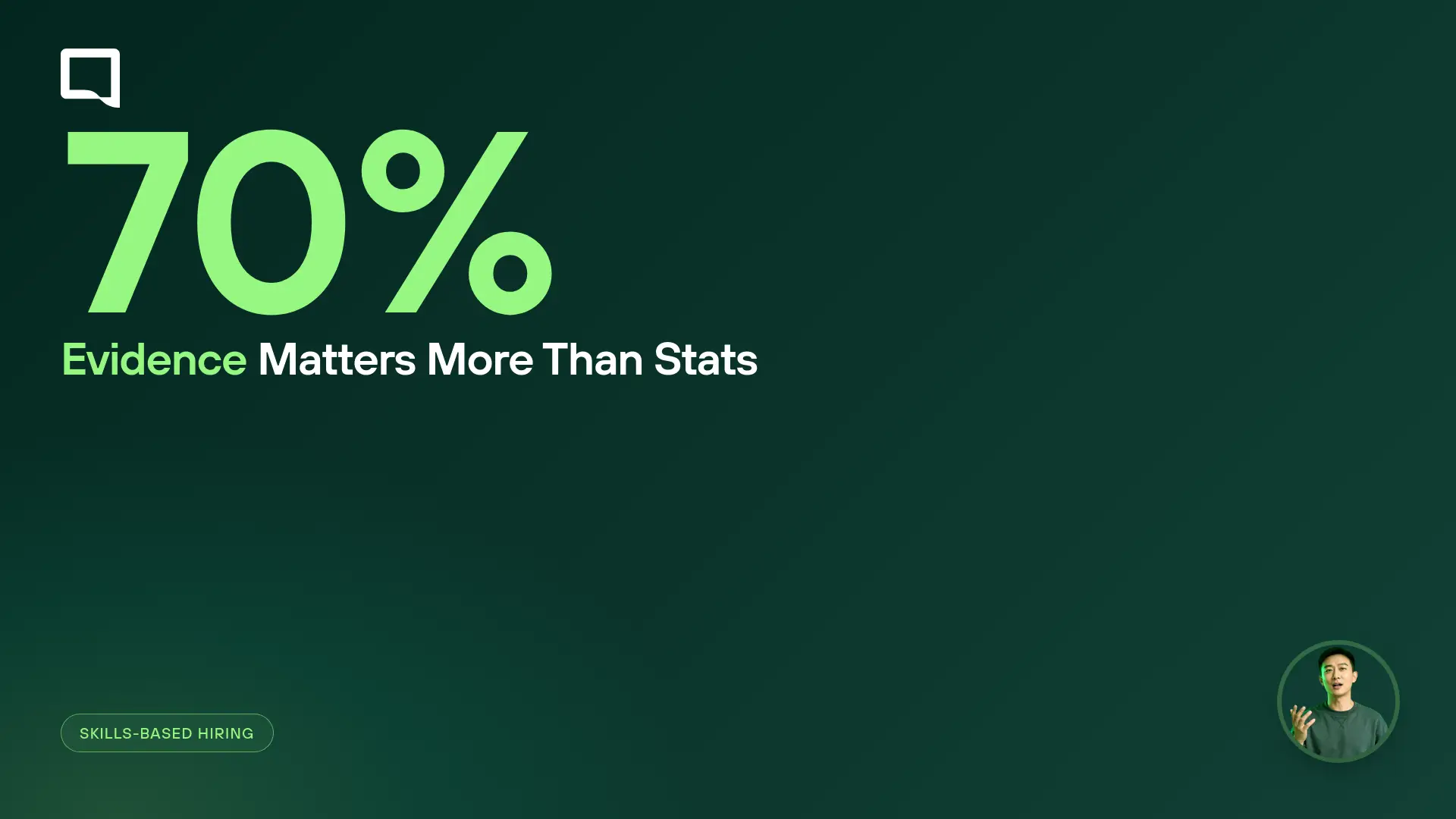
The current discourse was recently highlighted by comments from Dr. Naresh Kumar Puritipati, President-HR at Deepak Fertilisers and Petrochemicals Corporation (DFPCL). According to industry reports, Puritipati noted that 70 percent of employers now utilize skills-based hiring for entry-level recruitment, a marked increase from 65 percent in the previous year. This statistic has been echoed across various trade publications as a definitive indicator of progress.
However, from an analytical perspective, the figure lacks the foundational support required for such a sweeping claim. There is no accompanying academic study, no peer-reviewed methodology, and no transparent data set to verify how these figures were derived. When such numbers are introduced without context, they function more as a rhetorical device to signal industry alignment with current trends rather than as empirical evidence of a systemic shift. For HR leaders and recruitment strategists, accepting these figures at face value poses a significant risk: the danger of building organizational strategy upon a foundation of unverified industry folklore.
Contextualizing the Shift: Degrees vs. Competencies
To understand the current tension, one must look at the historical trajectory of recruitment. For decades, the university degree acted as a reliable, if imperfect, proxy for trainability and baseline intelligence. As the pace of technological change has accelerated, the shelf life of the knowledge gained in a four-year degree has shortened, leading to the rise of "skills-based hiring."
The argument presented by many HR executives is that, in a world where technical requirements change every 18 to 24 months, a degree is no longer a sufficient predictor of future performance. However, there is a fundamental misunderstanding in the trade press regarding the status of these credentials. While the expectation of what a degree signals is indeed evolving, the degree itself remains a cornerstone of the hiring process. Most companies have not abandoned the degree requirement; they have simply layered additional assessments on top of it. Therefore, the narrative that skills are "replacing" degrees is factually incomplete. The reality is one of additive, rather than subtractive, qualification processes.
Defining the Methodology: The Fragmentation of "Skills-Based"
A primary issue in the current debate is the lack of a standardized definition for what constitutes "skills-based hiring." When the term is used by industry leaders, it frequently masks a wide array of disparate practices.
For instance, Veena Bansal, CHRO at M3M India, has articulated a rigorous approach to evaluation that involves assessing how candidates navigate complex problem-solving scenarios, interpersonal dynamics, and adaptive learning through case studies and previous work evidence. This represents a highly structured, evidence-heavy methodology. Conversely, other organizations describe their shift to "skills-based hiring" in terms of internal learning management systems (LMS) and upskilling programs for existing staff.
There is a profound distinction between these two approaches. The former is a pre-hire assessment method, while the latter is a post-hire capability-building initiative. When an executive claims their company is practicing "skills-based hiring" because they have introduced self-paced learning modules for current employees, they are conflating internal professional development with external recruitment strategy. This lack of taxonomic clarity allows companies to adopt the buzzword without actually implementing the rigorous, scorecard-driven interviewing processes that the term implies.
The AI Competency Gap: Familiarity vs. Mastery
The ambiguity surrounding "skills-based" claims is further exacerbated by the way organizations measure technological proficiency. Dr. Puritipati also cited research suggesting that while 94 percent of surveyed learners report using AI tools, only 20 percent have successfully built an AI-powered automation or application.
This 74-percentage-point gap is not just an interesting data point; it is the ultimate indictment of shallow hiring practices. If a recruitment process relies on a candidate’s self-reported familiarity with a tool—or even a cursory "hands-on" interview question—it is failing to differentiate between the 94 percent who are users and the 20 percent who are builders. In the context of hiring, this represents the difference between "exposure" and "capability." A robust skills-based framework must be designed to identify the latter, yet many current processes remain anchored in surface-level questioning that rewards familiarity, effectively missing the very talent they intend to identify.
The Necessity of the Rubric
The transition from a resume-based screening process to a true skills-based model requires more than a change in philosophy; it requires a change in administrative architecture. The organizations that succeed in this transition are those that move away from subjective, intuition-based interviewing and toward the use of objective, role-specific rubrics.
A rubric serves as the "source of truth" in a hiring decision. It forces the interviewer to document why a candidate performed better on a specific competency—such as "cross-functional collaboration" or "systemic problem-solving"—compared to other candidates. Without a standardized scorecard, the hiring process remains subject to the same cognitive biases that have plagued traditional recruitment for generations.
The industry’s confidence in its own progress currently outpaces its documentation. If a talent acquisition leader cannot produce a documented evidence trail and a specific rubric for a recent hire, then the claim of "skills-based hiring" is merely a rhetorical stance. It is a system in name only.

Implications for the Future of Recruitment
The future of professional recruitment does not lie in the total abandonment of credentials, but in the maturation of assessment methodologies. The gap between claiming to hire on skills and actually doing so can only be bridged through three specific actions:
- Standardization: Developing clear, observable definitions for specific skills that move beyond buzzwords.
- Evidence-Generation: Moving from "tell me about a time" questions to simulations and practical work samples that mirror the requirements of the job.
- Documentation: Maintaining rigorous, rubric-based scorecards that allow for the post-hire analysis of hiring efficacy.
As companies continue to navigate the complexities of the modern workforce, the demand for transparency will grow. If organizations continue to rely on unsourced statistics and loosely defined terminology, they risk alienating high-quality talent who are increasingly wary of "skills-based" rhetoric that does not translate into meaningful, evidence-backed evaluation.
The challenge for the next decade of human resources is to move beyond the marketing of "skills-based hiring" and toward the actual engineering of it. This will require a pivot from the current obsession with high-level industry statistics toward the granular, often tedious, work of rubric design and evidence-based assessment. Only when an organization can produce the score, the evidence, and the rubric behind its hiring decisions on demand, can it truly claim to have left the old, credential-focused model behind.
Conclusion: The Evidence Mandate
The current wave of reporting on hiring trends serves as a reminder of the need for skepticism in corporate communications. While the shift toward valuing skills is a necessary evolution, the movement is currently hampered by a lack of rigorous, verifiable data. Until the industry adopts a standardized methodology for defining and measuring these skills, the "70 percent" statistic and similar figures will remain what they are today: claims that require independent verification.
For hiring leaders, the lesson is clear: do not build your recruitment strategy on the shifting sands of unverified percentages. Instead, focus on the substance of the interview process. If the method is not measurable, it is not evidence-based. By prioritizing the rubric over the label, companies can finally align their hiring practices with the demands of an increasingly complex and technical global economy. True innovation in recruitment is not found in the adoption of a new trend, but in the commitment to a more rigorous, transparent, and evidence-based standard of professional evaluation.
Related posts: