The Hidden Legal Peril of AI-Driven Recruitment and Performance Management in the Modern Workplace

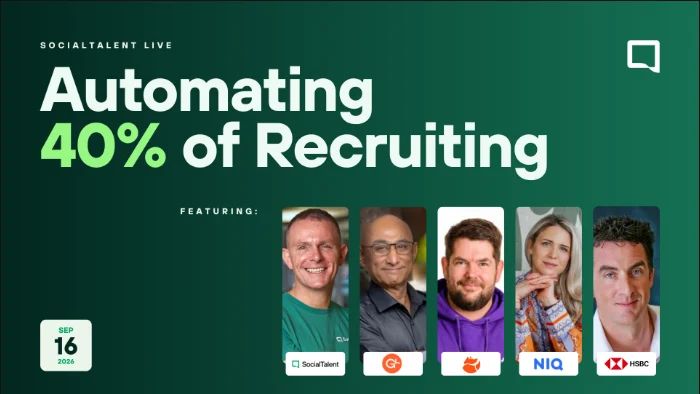
The promise of artificial intelligence in human resources is seductive: the ability to distill a mountain of 800 applications into a refined shortlist of 12 candidates in under an hour. Yet, this efficiency often creates a "black box" scenario that leaves organizations vulnerable to significant legal and regulatory repercussions. When a rejected candidate demands an explanation for their exclusion—a request that may arrive months after the initial screening—the inability of a firm to provide a transparent, evidence-based justification constitutes a critical failure. Samira Cakali, head of employment at Winston Solicitors, has underscored that this is not a mere policy oversight; it is an fundamental evidence-production failure that poses existential risks to employers who mistakenly believe that adopting AI software equates to compliance.
The Regulatory Landscape: From GDPR to the Data (Use and Access) Act
The regulatory environment regarding automated decision-making has undergone a seismic shift. In March 2026, the Information Commissioner’s Office (ICO) published its "Recruitment Rewired" report, which served as a wake-up call for the HR industry. The report found that a vast number of organizations were engaging in "solely automated decision-making" under the UK GDPR without implementing the mandatory safeguards required by law.
This shift was further solidified by the enactment of the Data (Use and Access) Act 2025, which came into force on February 5, 2026. Rather than imposing a blanket prohibition on automated decision-making, the legislation introduced a nuanced framework of safeguards. Under this new regime, employers must provide absolute transparency regarding when automated processing is utilized, ensure candidates have a clear path to contest automated outcomes, and guarantee an explicit right to request human review. The ICO has made it clear that a Data Protection Impact Assessment (DPIA) is not a "tick-box" exercise; it requires granular detail, yet many firms are currently operating with DPIAs that lack the necessary depth to withstand regulatory scrutiny.
The Myth of Human Oversight
A central theme in current employment law discourse is the distinction between "meaningful human review" and "rubber-stamping." As Cakali notes, a recruiter who simply forwards the top ten names from an AI-generated ranked list has not exercised judgment; they have merely transmitted an automated decision.
For a review to be legally defensible, the human reviewer must possess three distinct elements: the authority to overturn the machine’s output, the contextual understanding to evaluate the candidate holistically, and the practical capability to reach a different conclusion. If the named approver in an organization’s process flow has never once changed a tool’s ranking, the firm does not have a human review process—it has a formality. This "automation bias," where humans defer to the machine’s output, is a common trap. When challenged in an employment tribunal, a signed-off process map that shows no evidence of actual human intervention will likely be dismissed as insufficient.

Discrimination and the Equality Act 2010
The legal exposure extends far beyond data protection. The Equality Act 2010 remains a primary concern for employers using AI, particularly regarding indirect discrimination. If an AI tool is trained on an organization’s historical hiring data, it inevitably inherits the patterns of that history—including unconscious biases, demographic preferences, and exclusionary practices that the company may have spent years trying to eradicate.
When a screening tool disadvantages disabled applicants or specific protected groups, the liability rests solely with the employer. Vendors are not the respondents in these tribunal cases. Organizations that attempt to hide behind vendor indemnity clauses are operating under a dangerous misconception: while a contract might allow an employer to sue a vendor for damages, it does not shield the employer from the legal and reputational consequences of a discrimination finding by an employment tribunal.
Beyond Hiring: The Expansion into Performance Management
The risk profile associated with AI tools is not confined to the front end of the employment lifecycle. Productivity scores, flight-risk indicators, and algorithmic performance monitoring are increasingly used to shape promotion paths, capability procedures, and, most critically, redundancy selection.
This creates a secondary, and perhaps more dangerous, layer of exposure. Unlike hiring decisions, which are subjected to external scrutiny by rejected applicants, performance-tooling outputs often remain siloed within the internal HR infrastructure. Consequently, unfair dismissal claims arising from AI-influenced performance reviews are currently an under-monitored, yet high-stakes, area of litigation. If an employer cannot justify why a specific employee was flagged as a "flight risk" or deemed "underperforming" based on an algorithm, they will struggle to defend a dismissal or a promotion denial in a court of law.
Chronology of Compliance and Evidence Retention
The most pressing challenge for Talent Acquisition (TA) leaders is the temporal gap between the use of a tool and the arrival of a legal challenge. Employment claims often materialize months, if not years, after the decision was made. By that time, vendors may have updated their software, purged their logs, or gone out of business, leaving the employer with no audit trail.
A defensible file must, according to legal experts, include the following:

- Documented Human Review: A record showing that at every rejection point, a human actually intervened and evaluated the candidate.
- Version Control: Evidence of exactly which version of the algorithm was used at the time of the decision.
- Bias Monitoring: Dated, recurring reports demonstrating that the organization actively tested the tool for discriminatory outcomes.
- Reasoning Logs: A clear explanation of the scoring criteria used by the tool and the rationale behind those criteria.
This data cannot simply reside within the vendor’s proprietary dashboard. Employers must take ownership of the data at the moment of the decision. Relying on the vendor to "reconstruct" these events after a claim has been filed is a strategy that will almost certainly fail to meet the standard of evidence required by regulators.
The Procurement Imperative
The ICO’s expectations for procurement are clear: employers must interrogate developers regarding their bias testing methodologies before a contract is ever signed. If a supplier cannot produce verifiable evidence of how they test for bias, or if they refuse to disclose the logic behind their algorithms, they are effectively shifting the burden of compliance onto the client.
This procurement phase is the final point at which an organization can mitigate risk. Once the tool is live, the responsibility shifts from "evaluation" to "continuous monitoring." Employers must treat AI tools not as "set-and-forget" infrastructure, but as dynamic processes that require constant calibration.
Implications for the Future of Work
The trajectory of UK employment law suggests that we are entering an era of "algorithmic accountability." The forthcoming ICO guidance, expected in winter 2026, will likely further clarify these obligations, but the current legislative framework already provides sufficient warning.
Organizations that thrive in this environment will be those that have moved past the hype of AI efficiency and toward a culture of rigorous, documented decision-making. The "win" of saving time on recruitment is ephemeral; the cost of a failed legal defense involving discriminatory algorithms is permanent. For HR departments, the task is no longer just about hiring the best talent—it is about ensuring that every step of the process, whether executed by a human or a machine, is transparent, accountable, and, above all, defensible in the eyes of the law.
In summary, the transition to AI in the workplace requires a paradigm shift: HR leaders must transition from being "users" of technology to being "stewards" of the data and decisions that technology generates. Only by owning the process and the evidence at every stage can a business protect itself from the inherent risks of an automated future.