The Evolution of Enterprise Search Intelligence: How Rank Tracking Software is Adapting to AI and Global Scale

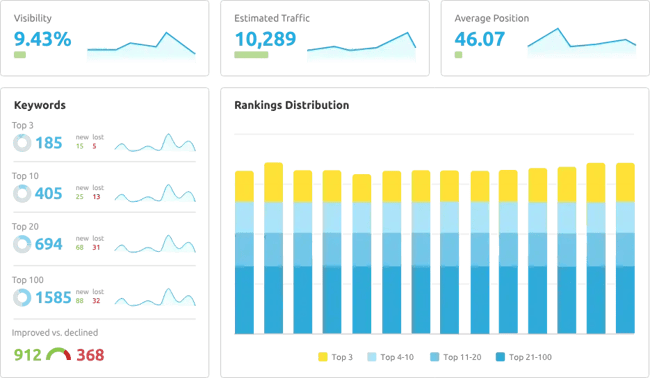
The landscape of digital visibility is undergoing a fundamental transformation as enterprise-level organizations move beyond traditional keyword monitoring toward comprehensive search intelligence. In an era where search engines are increasingly powered by generative artificial intelligence and hyper-localized algorithms, the requirements for rank-tracking software have expanded from simple position checks to the management of millions of data points across diverse devices, geographical locations, and complex search features. Modern enterprise SEO strategies now demand that this intelligence be integrated directly into corporate dashboards, CRM workflows, and executive reporting suites to drive measurable business outcomes.
The New Paradigm of Enterprise SEO
Enterprise rank tracking differs from standard search monitoring primarily through its scale and the complexity of the environments it must navigate. While a small business might track a few hundred keywords on a daily basis, a global enterprise often manages portfolios exceeding 500,000 keywords across dozens of international markets. This requires a robust infrastructure capable of handling high data volumes without sacrificing accuracy or granularity.
The current market shift emphasizes that ranking data, while valuable as a visibility metric, is insufficient when viewed in isolation. To provide true value to a large organization, rank tracking must be paired with Business Intelligence (BI) tools to identify market risks and opportunities. Furthermore, by connecting this data to web analytics and Customer Relationship Management (CRM) systems, organizations can finally draw a direct line between a keyword’s movement in search results and its impact on the sales pipeline.

A Chronology of Search Monitoring Evolution
The transition to modern enterprise search intelligence has occurred through several distinct technological phases:
- The Era of the Ten Blue Links (2000–2010): Early rank tracking focused almost exclusively on desktop results and organic positions 1 through 100.
- The Rise of SERP Features (2010–2018): Search engines introduced featured snippets, local packs, and image carousels, forcing trackers to monitor more than just "blue links."
- Mobile-First and Hyper-Localization (2018–2022): The industry shifted to prioritize mobile rankings and coordinate-level accuracy for local search results.
- The Generative AI Revolution (2023–Present): The introduction of AI Overviews (SGE) and Answer Engine Optimization (AEO) has created a new layer of visibility that traditional trackers are now racing to capture.
Technical Requirements for Enterprise-Grade Software
As the complexity of the search environment grows, enterprise teams are adopting more rigorous evaluation criteria for their software stacks. Industry analysts suggest that accuracy methodology is now a top priority, with a preference for vendors that utilize a sophisticated mix of residential proxies and data center IPs to mirror real-user experiences across different regions.
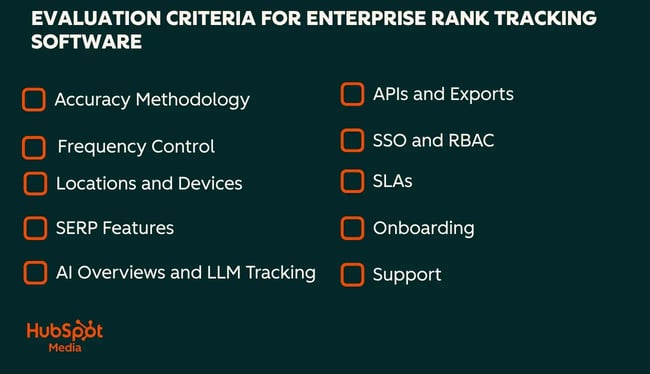
Furthermore, frequency control has become a critical differentiator. While daily updates remain the industry standard, high-stakes events such as product launches, global sales cycles, and major news events require hourly or on-demand refresh capabilities. This level of data freshness allows enterprise teams to pivot strategies in real-time, a necessity in volatile markets.
Security and governance also play a pivotal role in the selection process. Enterprise environments require Single Sign-On (SSO) integration and Role-Based Access Control (RBAC) to ensure that data access is tiered appropriately across global teams. Service Level Agreements (SLAs) have become more stringent, with organizations demanding guaranteed uptimes and contractual commitments to data integrity.
The Impact of Generative AI on Search Tracking
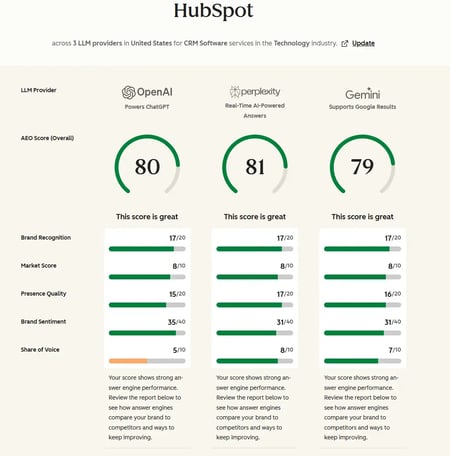
The most significant disruption to the SEO industry in recent years is the emergence of AI-generated responses. AI Overviews and Large Language Models (LLMs) like ChatGPT, Gemini, and Perplexity are fundamentally changing how users consume information. Consequently, enterprise software must now track "Answer Engine Optimization" (AEO) metrics.
This involves monitoring which URLs are cited within AI responses and capturing prompt-level data. According to recent industry reports, AI Overviews can significantly impact organic click-through rates, sometimes reducing traffic to traditional organic results while increasing high-intent traffic to cited sources. Organizations are now utilizing specialized tools to benchmark their "Share of Model" alongside their traditional "Share of Voice."
Market Leaders and Platform Innovations
Several platforms have emerged as leaders in the enterprise space, each offering distinct advantages for large-scale operations.
HubSpot Marketing and Content Hubs
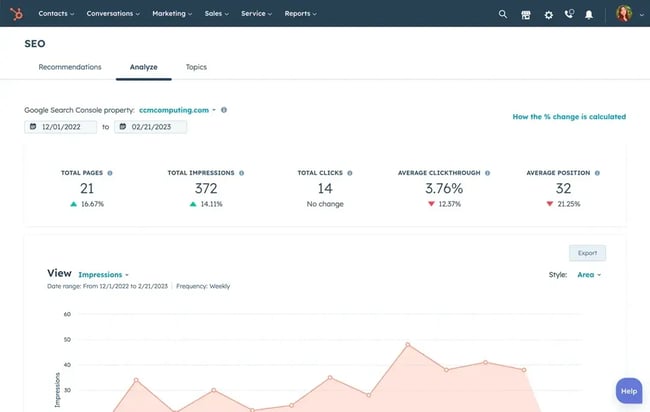
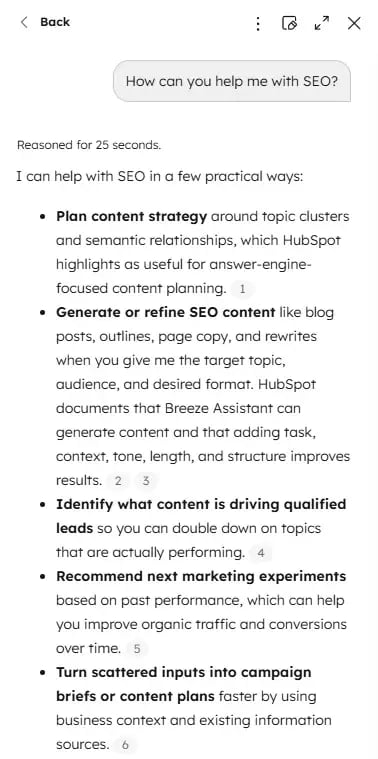
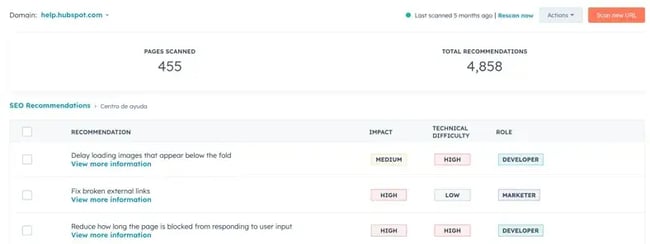
HubSpot has positioned itself as a leader in "unified search intelligence" by integrating SEO tools directly into its broader CRM platform. For enterprises, the primary advantage is the removal of data silos. When SEO recommendations, content performance, and lead attribution live in the same environment, marketing teams can prioritize optimizations based on potential revenue rather than just search volume. Their "Breeze Assistant" AI further supports teams by automating the identification of high-impact content improvements across thousands of pages.
Semrush One
Semrush remains a dominant force due to its massive data infrastructure. The "Semrush One" suite combines traditional keyword research with an "AI Visibility Toolkit," allowing brands to monitor their presence across both Google and emerging AI platforms like Perplexity. Their competitive intelligence tools are widely regarded as the industry benchmark, providing deep insights into rival domain health and share of voice at scale.
Profound
Profound represents the "new guard" of search tracking, built specifically for the AI era. Unlike legacy tools that added AI tracking as a secondary feature, Profound was designed from the ground up to monitor how brand narratives are shaped within LLMs. It tracks citations across ChatGPT, Claude, and Gemini, providing enterprise brand managers with the data needed to influence AI-generated sentiment and accuracy.
Supporting Data and Industry Analysis
Data from recent search industry surveys indicates a significant shift in enterprise spending. Approximately 64% of enterprise SEO directors report that "integration with internal data warehouses" is their top priority for 2024. Furthermore, investment in AI-specific tracking tools has grown by an estimated 40% year-over-year as brands seek to protect their visibility in generative search environments.
Analysis of "Pixel Position" has also gained prominence. Traditional rank (e.g., Position 1) is increasingly viewed as a vanity metric if that position is pushed "below the fold" by multiple ads and AI Overviews. Modern software now calculates the actual vertical pixels from the top of the screen to the organic result, providing a truer measure of visibility.
Industry Perspectives and Official Responses
Chief Marketing Officers (CMOs) at Fortune 500 companies have increasingly voiced the need for "actionable" rather than "observational" data. In a recent industry roundtable, one tech executive noted, "We no longer have the luxury of waiting 30 days for a ranking report. We need to know how our brand is being interpreted by AI models today, and we need that data to flow directly into our sales forecasts."
Software vendors have responded by opening up their APIs. The trend toward "headless SEO data"—where the raw ranking information is pulled via API into a company’s own proprietary dashboard—has become the preferred method for the most sophisticated global players.
Broader Impact and Future Implications
The evolution of enterprise rank tracking marks the end of SEO as a siloed technical discipline. It is now a core component of corporate market intelligence. As search engines continue to evolve into "answer engines," the companies that succeed will be those that can accurately measure their influence across the entire digital ecosystem.
The future of the industry likely involves even deeper integration with predictive analytics. Instead of merely reporting where a site is ranking, the next generation of enterprise software will use historical data and AI modeling to predict where a site will rank based on planned content changes and competitor movements.
For global organizations, the stakes are high. In a digital economy where search remains the primary driver of discovery, the ability to monitor, analyze, and react to search data at scale is no longer a competitive advantage—it is a requirement for survival. The transition from simple rank tracking to comprehensive search intelligence is not merely a technical upgrade; it is a strategic imperative that reflects the new reality of the AI-driven internet.