
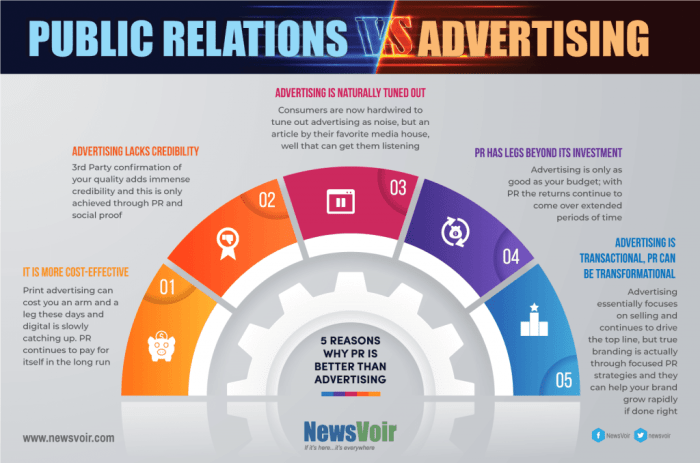
Marketing advertising and PR are essential components for any successful business. This guide delves deep into the fundamentals, strategies, and modern trends of these crucial disciplines. From understanding the 4Ps of marketing to crafting compelling press releases, and exploring the intricate dance between advertising and public relations, we’ll cover it all. Prepare to unlock the secrets to building a strong brand and connecting with your target audience.
We’ll explore the nuances of digital marketing, content marketing, and social media strategies, along with the art of crafting persuasive advertising campaigns. We’ll also delve into the world of public relations, examining how to build and maintain a positive brand image, manage crises effectively, and craft compelling press releases. Get ready to gain practical insights into creating integrated marketing campaigns and maximizing their impact.
Marketing Fundamentals
Understanding the fundamentals of marketing is crucial for any business looking to thrive in today’s competitive landscape. Effective marketing strategies are built on a solid foundation of knowledge about customer behavior, market trends, and the tools available to reach target audiences. This exploration delves into the core components of successful marketing, from the classic 4Ps to modern digital strategies.The principles discussed here will equip you with the tools necessary to develop and implement campaigns that resonate with customers, drive sales, and ultimately achieve your business objectives.
The Marketing Mix (4Ps)
The marketing mix, often referred to as the 4Ps, is a crucial framework for developing effective marketing strategies. It encompasses the key elements that businesses need to consider when crafting a comprehensive marketing plan.
- Product: This refers to the tangible or intangible offerings that a company provides to the market. A strong product strategy considers factors such as quality, design, features, branding, and packaging. A well-defined product strategy ensures that the product meets customer needs and expectations. For instance, Apple’s focus on design and user experience significantly contributes to its product success.
- Price: Pricing strategy determines the value proposition of a product or service. Pricing decisions need to consider production costs, competitor pricing, market demand, and desired profit margins. Dynamic pricing models, adjusted based on demand, are increasingly prevalent, particularly in the e-commerce space.
- Place: This element addresses how the product is distributed to the target market. Effective distribution strategies include selecting the right channels, ensuring product availability, and considering logistics and supply chain management. For example, a company might choose to sell directly to consumers through its website or through a network of retail partners.
- Promotion: This encompasses all activities aimed at communicating the value proposition of a product or service to the target market. This includes advertising, public relations, sales promotions, and personal selling. A well-rounded promotion strategy leverages various channels to build brand awareness and drive sales.
Types of Marketing Strategies
Modern marketing strategies encompass a wide range of approaches, each tailored to specific goals and target audiences.
- Digital Marketing: This involves leveraging digital channels such as websites, social media, search engines, and email marketing to reach and engage customers. Digital marketing offers highly measurable results and allows for precise targeting of specific demographics.
- Content Marketing: This focuses on creating and distributing valuable, relevant, and consistent content to attract and retain a clearly defined audience. Content marketing aims to educate, inform, and entertain, ultimately building brand trust and credibility. For example, a software company might publish blog posts or create tutorials to demonstrate its product’s capabilities.
- Social Media Marketing: This involves leveraging social media platforms to build brand awareness, engage with customers, and drive sales. Social media marketing requires a deep understanding of the specific platform’s user base and a consistent posting strategy.
Customer Segmentation
Effective customer segmentation is critical for tailoring marketing efforts to specific customer groups. By dividing the market into distinct segments, businesses can develop targeted messages and campaigns that resonate with each group’s unique needs and preferences.
- Demographic Segmentation: This divides customers based on factors such as age, gender, income, education, and occupation.
- Psychographic Segmentation: This focuses on customers’ lifestyles, values, interests, and attitudes.
- Geographic Segmentation: This divides customers based on their location, such as region, city, or country.
- Behavioral Segmentation: This considers customer purchasing behavior, such as purchase frequency, brand loyalty, and product usage.
Market Research
Thorough market research is essential for understanding customer needs, preferences, and behaviors. This information forms the basis for developing effective marketing strategies.
Marketing, advertising, and PR are all about crafting compelling narratives to connect with audiences. But sometimes, the very nature of what we’re marketing gets caught up in legal battles, like the recent Supreme Court ruling on patenting human genes, as detailed in this article no patents on human genes supreme court rules. This ruling highlights the complex interplay between innovation, ethics, and ultimately, how we communicate these advancements to the public.
Ultimately, understanding these intricate legal landscapes is crucial for effective marketing and public relations strategies in today’s world.
- Market Research Methods: Market research encompasses various methods such as surveys, focus groups, interviews, and analyzing sales data.
- Importance of Research: Understanding the market through research is crucial to avoid wasted marketing efforts and ensures campaigns are aligned with customer preferences.
Marketing Channels Comparison
Different marketing channels offer unique advantages and disadvantages.
| Channel | Advantages | Disadvantages |
|---|---|---|
| Email Marketing | Direct communication, cost-effective, measurable results | Potential for spam complaints, low open rates if not targeted |
| (Search Engine Optimization) | Organic traffic, long-term visibility, cost-effective | Time-consuming, requires ongoing effort, difficult to measure immediate impact |
| Paid Advertising | Targeted reach, immediate results, measurable ROI | Can be expensive, requires ongoing budget allocation, risk of poor targeting |
Advertising Strategies
Advertising is the cornerstone of modern marketing, driving brand awareness and ultimately, sales. It’s a multifaceted discipline that leverages various mediums and strategies to connect with target audiences. Effective advertising goes beyond simply showcasing a product; it crafts narratives, builds brand identities, and fosters emotional connections.
Modern Advertising Mediums
Modern advertising utilizes a diverse array of mediums to reach audiences. These mediums range from traditional print and broadcast formats to the ever-evolving digital landscape. Understanding the strengths and weaknesses of each medium is crucial for creating targeted and effective campaigns.
Strengths and Weaknesses of Advertising Formats
Different advertising formats cater to specific needs and target audiences. A comprehensive understanding of these strengths and weaknesses allows marketers to choose the optimal channels for their objectives.
| Advertising Format | Strengths | Weaknesses |
|---|---|---|
| Print (Newspapers, Magazines) | Tangible, high-quality visuals, strong brand association, targeted reach. | Limited reach, static nature, high production costs, slow turnaround time, less engaging. |
| Television | Wide reach, high impact visuals and sound, strong emotional connection. | High production costs, expensive to air, difficult to measure effectiveness, potential for ad fatigue. |
| Radio | Highly accessible, engaging auditory experience, potentially lower cost compared to TV, localized reach. | Limited visuals, relying on sound and voice-overs only, potentially less memorable, difficult to target specific demographics. |
| Social Media Ads | Highly targeted, measurable results, cost-effective, immediate feedback, high engagement potential. | Potential for ad fatigue, algorithm fluctuations affecting reach, need for constant monitoring and optimization. |
| Video Ads (YouTube, Streaming Platforms) | High engagement potential, impactful visuals and sound, diverse targeting options. | Production costs, potential for ad-skipping, algorithm unpredictability, requires high-quality production. |
| Digital Display Ads (Websites, Apps) | High targeting capabilities, retargeting options, real-time analytics, potentially low cost. | Potential for banner blindness, difficulty in capturing attention, requires constant optimization. |
Social Media Advertising Campaign Plan
A social media campaign for a new line of sustainable athletic apparel requires a tailored approach. The campaign will focus on building community, emphasizing environmental responsibility, and leveraging user-generated content.
- Target Audience: Millennials and Gen Z environmentally conscious athletes.
- Platform Strategy: Prioritize Instagram and TikTok for visual engagement, complemented by Facebook for broader reach and community building.
- Content Pillars: Highlight sustainable production processes, feature athletes wearing the apparel in diverse settings, and encourage user-generated content through contests and challenges.
- Call to Action: Direct users to the brand website for product information and purchase options. Offer exclusive discounts and early access to new products for social media followers.
Importance of A/B Testing
A/B testing is a critical component of optimizing advertising campaigns. By systematically comparing different versions of ads, marketers can identify the most effective elements and tailor their strategies for maximum impact. This process enhances campaign efficiency by continuously improving ad performance.
A/B testing is a scientific method to improve marketing campaigns by analyzing the performance of different variations of ads.
Role of Branding in Effective Advertising
Branding is integral to effective advertising. A strong brand identity creates recognition, trust, and emotional connections with consumers. Consistent branding across all advertising mediums reinforces brand messaging and fosters brand loyalty.
Public Relations (PR) Techniques
Public relations (PR) is a crucial aspect of any successful business strategy. It’s about building and maintaining a positive image, fostering relationships with key stakeholders, and effectively communicating your brand’s story. A strong PR strategy can significantly impact your brand’s reputation and drive business growth. This section delves into the core PR techniques, offering practical strategies and insights to help you navigate the complexities of public perception.Crafting a compelling message is essential in PR.
A press release, for example, serves as a powerful tool to disseminate information to the media and public. Well-crafted press releases can generate significant media coverage and boost brand visibility.
Crafting a Compelling Press Release
Press releases are concise, newsworthy announcements distributed to media outlets. They provide journalists with essential information about a company, product, or service. A well-written press release is critical for gaining media attention. Key elements include a compelling headline, a captivating lead paragraph summarizing the key news, and supporting details about the event, product launch, or company update.
Incorporating quotes from key figures adds credibility and personality.
Effective PR Strategies for Different Industries
Different industries require tailored PR strategies. For technology companies, highlighting innovative products and partnerships with industry leaders can be effective. In the fashion industry, showcasing runway collections, collaborations, and celebrity endorsements can generate significant buzz. Food and beverage companies might focus on consumer reviews, taste tests, and partnerships with food bloggers. The specifics of each strategy will vary based on the unique characteristics of the industry.
The Role of PR in Building Brand Image
Public relations plays a pivotal role in shaping and maintaining a positive brand image. It involves proactively managing how the public perceives your brand through consistent communication and actions. Building trust and credibility is crucial, achieved by consistently providing value to your target audience through engaging content, events, and interactions. Positive public perception translates into customer loyalty, increased brand value, and ultimately, greater success.
Crisis Communication in PR
Crisis communication is a critical aspect of PR. A well-defined crisis communication plan helps a company respond effectively to negative events, maintaining public trust and mitigating reputational damage. Proactive planning, clear communication channels, and swift action are key elements of a successful crisis management strategy.
Comparison of PR Tools and Techniques
Various PR tools and techniques are available. Press releases, media outreach, social media engagement, and community relations are crucial tools. Each tool serves a distinct purpose in the overall PR strategy. Choosing the right tools depends on the specific objectives and target audience. Effective PR requires a comprehensive understanding of the strengths and limitations of each tool.
Key Differences Between Marketing and PR
| Feature | Marketing | PR |
|---|---|---|
| Objective | Driving sales and increasing revenue | Building and maintaining a positive brand image and reputation |
| Target Audience | Potential customers | Stakeholders (customers, media, investors, etc.) |
| Focus | Promoting products and services | Promoting the organization as a whole |
| Tools | Advertising, promotions, direct marketing | Press releases, media relations, social media, events |
| Control | High degree of control over messaging and placement | Limited control over media coverage and public perception |
The table above highlights the fundamental distinctions between marketing and PR, emphasizing their unique roles in building a successful business.
Marketing, advertising, and PR are all about connecting with audiences. Google’s recent development of a search algorithm with an eye for fashion, like google builds a search algorithm with an eye for fashion , highlights how crucial understanding consumer preferences is in today’s digital world. This innovative approach is sure to impact how brands target fashion-conscious consumers, shaping future marketing strategies in the industry.
Integration of Marketing, Advertising, and PR
The modern marketing landscape demands a unified approach. Successfully achieving marketing objectives requires more than siloed efforts in marketing, advertising, and public relations. Integrating these disciplines creates a powerful synergy, amplifying impact and driving better results. This approach aligns messaging, enhances brand perception, and creates a cohesive customer experience.Integrating these functions isn’t just about combining efforts; it’s about fostering a collaborative environment where each discipline supports the others.
This collaborative strategy leads to more effective campaigns, optimized resource allocation, and a more impactful return on investment.
Synergistic Working of Disciplines
The three disciplines—marketing, advertising, and PR—complement each other beautifully. Marketing identifies the target audience and establishes the overall strategy. Advertising delivers the message to the target audience through compelling visuals and persuasive copy. PR manages the brand’s reputation and builds relationships with key stakeholders. When these functions work in harmony, the brand’s message resonates more effectively with the intended audience, leading to stronger brand recognition and loyalty.
Examples of Integrated Marketing Campaigns
Many successful campaigns showcase the power of integration. For instance, a company launching a new product might use marketing research to define the target audience. Advertising campaigns might use social media platforms to reach the audience, while PR activities might generate media coverage through press releases and interviews. This integrated approach ensures a consistent message across all channels, creating a stronger brand presence.
Importance of Consistent Messaging
Consistent messaging is paramount in integrated campaigns. A unified brand voice and message across all platforms builds trust and reinforces brand identity. Inconsistencies can confuse the audience and damage the brand’s credibility.
Measuring Campaign Effectiveness
Measuring the effectiveness of integrated campaigns involves tracking key metrics across all channels. This includes website traffic, social media engagement, sales figures, and media mentions. Analyzing these metrics provides insights into campaign performance and allows for adjustments to optimize results. Tools like Google Analytics, social media analytics dashboards, and media monitoring services can help track and measure the impact of integrated campaigns.
Marketing, advertising, and PR are crucial for any business, big or small. Understanding how to effectively reach your target audience is key, and that often involves using the right tools. For small businesses looking to streamline their processes, Salesforce Lightning Essentials can be a game-changer, providing a powerful platform for managing customer relationships and boosting sales. Learning the basics of salesforce lightning essentials for small business can give you a significant edge in the competitive market.
Ultimately, these tools, combined with strong marketing strategies, are essential for lasting success.
Challenges of Coordination
Coordinating marketing, advertising, and PR efforts presents several challenges. These include differing priorities, communication breakdowns, and conflicting timelines. Successfully integrating these disciplines requires strong leadership, clear communication channels, and a shared understanding of the overall campaign goals. Establishing clear roles and responsibilities, setting shared deadlines, and using project management tools can help streamline the process. A collaborative environment, where each team member understands the other’s role and objectives, is key to overcoming these challenges.
Modern Trends in Marketing, Advertising, and PR

The landscape of marketing, advertising, and PR is constantly evolving, driven by technological advancements and shifting consumer behaviors. This dynamic environment demands adaptation and innovation to remain competitive. Understanding these trends is crucial for businesses seeking to effectively connect with their target audiences and achieve their marketing objectives.
The Impact of Social Media on Marketing and Advertising
Social media platforms have revolutionized how businesses interact with consumers. They provide unparalleled opportunities for targeted advertising, direct engagement, and brand building. Businesses can leverage social media to create engaging content, build communities, and foster customer loyalty. Real-time feedback and analysis allow for quick adjustments to campaigns, optimizing results. For example, a company can monitor customer reactions to a new product launch on Twitter and adjust its marketing strategy accordingly.
Examples of Emerging Technologies in Marketing and Advertising
Several emerging technologies are reshaping the marketing and advertising landscape. Artificial intelligence (AI) is transforming customer interactions by enabling personalized recommendations and targeted advertising. Virtual and augmented reality (VR/AR) are creating immersive brand experiences that engage consumers on a deeper level. AI-powered chatbots provide instant customer support, improving efficiency and satisfaction.
The Importance of Data Analytics in Modern Marketing Strategies
Data analytics is fundamental to successful modern marketing. By analyzing customer data, businesses can gain insights into consumer preferences, behaviors, and trends. This allows for more effective targeting, personalization, and campaign optimization. For instance, a retailer using data analytics can identify specific customer segments interested in particular products, enabling tailored marketing campaigns.
The Evolving Role of Influencers in Advertising and PR
Influencers have become powerful voices in advertising and PR. They connect with their followers on a personal level, building trust and credibility. This trust translates into increased brand awareness and sales. Businesses are leveraging influencer marketing to reach specific target audiences, creating authentic and engaging content. This approach is more effective than traditional advertising methods because it leverages the authenticity of the influencer’s voice.
Future of Marketing, Advertising, and PR
| Category | Trend | Impact |
|---|---|---|
| Marketing | Hyper-personalization | Tailoring experiences to individual customer needs and preferences. |
| Advertising | Programmatic advertising | Automated ad buying and placement based on real-time data. |
| PR | Authenticity and transparency | Building trust through genuine communication and ethical practices. |
| All | AI-driven insights | Using AI to analyze vast amounts of data and predict future trends. |
| All | Immersive experiences | Engaging customers through virtual and augmented reality technologies. |
Case Studies and Examples
Unveiling successful marketing campaigns, impactful PR strategies, and insightful brand advertising requires a deep dive into real-world examples. Analyzing how businesses have achieved their goals through various marketing approaches offers valuable lessons and inspiration for modern practitioners. This section will showcase practical case studies across diverse fields, providing a glimpse into the effectiveness of different strategies.
A Successful Marketing Campaign: Dove’s “Real Beauty” Campaign
Dove’s “Real Beauty” campaign, launched in 2004, exemplifies a successful marketing campaign built on a powerful message. The campaign challenged traditional beauty standards by showcasing a diverse range of women and celebrating their natural beauty. Instead of focusing on unrealistic ideals, Dove emphasized the importance of self-acceptance and confidence. This approach resonated deeply with consumers, particularly young women, fostering a strong emotional connection with the brand.
The campaign generated significant media coverage, boosted brand awareness, and solidified Dove’s position as a socially responsible and progressive company. Dove’s marketing strategy effectively integrated social media, print advertising, and television commercials to reach a broad audience. The campaign’s success is directly attributed to its genuine portrayal of beauty, creating a lasting impact on both consumers and the beauty industry.
Effective PR Strategies for a Crisis: Johnson & Johnson’s Tylenol Crisis
In 1982, Johnson & Johnson faced a severe crisis when seven people died after consuming Tylenol capsules laced with cyanide. The company’s swift and decisive response is a classic example of effective PR strategies during a crisis. Instead of trying to downplay the issue or shifting blame, Johnson & Johnson immediately recalled all Tylenol products nationwide. This proactive measure demonstrated the company’s commitment to public safety and consumer well-being.
They also cooperated fully with authorities, engaging in transparent communication with the media and the public. This crisis response showcased the importance of prioritizing consumer trust and safety over short-term profits. The company’s handling of the crisis ultimately restored consumer confidence and solidified its reputation as a trustworthy and responsible company.
Advertising Strategies Behind a Popular Brand: Nike’s “Just Do It” Campaign
Nike’s “Just Do It” campaign, launched in 1988, has become synonymous with the brand’s powerful message of motivation and empowerment. The campaign’s enduring success lies in its ability to tap into the aspirations and desires of its target audience. Instead of simply promoting products, Nike’s ads focus on the emotional connection between athletes and their goals, portraying the struggle, dedication, and triumph associated with pursuing one’s aspirations.
The “Just Do It” slogan has become a globally recognized motto, inspiring individuals to push their limits and strive for excellence. The campaign’s success can be attributed to its ability to transcend product promotion and resonate with the universal desire for personal achievement. Nike’s consistent use of iconic athletes, impactful imagery, and motivational messages contributed to the campaign’s enduring impact.
Integrated Marketing Communications: McDonald’s Global Marketing Efforts, Marketing advertising and pr
McDonald’s exemplifies the power of integrated marketing communications by strategically blending various marketing channels. From its global advertising campaigns featuring iconic characters like Ronald McDonald to targeted promotions on social media platforms, McDonald’s creates a unified message across all platforms. Their marketing strategies are designed to resonate with local tastes and preferences, showcasing a degree of localization in advertising while maintaining brand consistency.
The integration of their various campaigns – including print advertising, television commercials, in-store promotions, and social media marketing – creates a powerful impact on consumers. This comprehensive approach ensures that McDonald’s message reaches its target audience through various touchpoints, driving brand awareness and sales.
Influencer Marketing: Sephora and its Beauty Influencers
Sephora has effectively utilized influencer marketing to drive engagement and sales. By partnering with beauty influencers who have a large and engaged following on social media, Sephora generates a strong impact on consumer behavior. These influencers showcase the brand’s products and create personalized content to reach a wider audience. The strategy’s effectiveness lies in the authenticity and trust that influencers build with their followers.
Sephora leverages this trust to promote products and increase brand awareness. The brand has carefully selected influencers aligned with its brand values, creating a seamless integration of influencer marketing into its overall marketing strategy.
Content Formats and Structure
Crafting compelling content is crucial for successful marketing, advertising, and PR campaigns. Different formats cater to various objectives and audiences, ensuring messages resonate and achieve desired outcomes. Understanding the appropriate structure for each format is equally vital for maximizing impact and achieving the intended results.Effective content formats enhance audience engagement, making information memorable and persuasive. Clear and concise structures help ensure the information is readily digestible and easily shared, ultimately leading to greater reach and brand visibility.
Marketing Strategies Blog Post
A blog post on marketing strategies should be engaging and informative. It should address a specific marketing challenge or opportunity and offer actionable insights. The post should be well-structured with clear headings, subheadings, and bullet points to enhance readability.
- Understanding Your Target Audience: Detailed analysis of customer demographics, psychographics, and behaviors is essential for tailoring marketing efforts to resonate with the specific needs and preferences of the target market. This allows for a focused approach and maximizes the effectiveness of marketing campaigns.
- Content Marketing Strategies: Creating valuable and engaging content that educates, entertains, and informs the target audience. This builds trust, establishes expertise, and drives organic traffic to the website. Content formats can include blog posts, articles, infographics, videos, and social media updates. Examples of content marketing include creating how-to guides for a specific industry or producing educational videos about company values.
- Utilizing : Search Engine Optimization () techniques to optimize content for search engines, ensuring higher visibility in search results and attracting more organic traffic. research and strategic content creation are crucial for improving search engine rankings.
Advertising Metrics Presentation Table
This table Artikels key advertising metrics, their importance, and how to interpret them. Tracking and analyzing these metrics provides valuable insights into campaign performance, allowing for informed decisions and optimization.
| Metric | Importance | Interpretation |
|---|---|---|
| Reach | Measures the number of unique individuals exposed to an advertisement. | High reach indicates a wide audience exposure. Evaluate if this reach aligns with the target audience. |
| Frequency | Indicates how many times an individual is exposed to an advertisement. | Analyze if frequency is high enough to create brand recall but not excessive. Balance is key. |
| Cost Per Mille (CPM) | Measures the cost to reach 1,000 individuals. | Compare CPM across different channels to determine the most cost-effective advertising strategy. |
| Click-Through Rate (CTR) | Measures the percentage of impressions that result in clicks. | High CTR suggests compelling ad copy and relevant targeting. |
| Conversion Rate | Measures the percentage of clicks that result in desired actions (e.g., purchases, sign-ups). | Evaluate if the conversion rate aligns with the campaign goals. |
PR Guide for Startups
This guide provides practical steps for startups to build a strong public relations strategy. It emphasizes building relationships with media and crafting compelling narratives to enhance visibility and credibility.
- Crafting a Compelling Narrative: Develop a clear and concise brand story that highlights the startup’s mission, values, and unique selling proposition. This will be critical for media outreach.
- Building Media Relationships: Identify relevant journalists and bloggers who cover the startup’s industry and build relationships through personalized outreach. Demonstrate a genuine interest in their work.
- Utilizing Media Kits: Create a comprehensive media kit that includes company information, key personnel, and recent accomplishments. This will aid journalists in writing stories about the startup.
- Crisis Communication Plan: Develop a crisis communication plan to address potential negative publicity or reputational risks. Transparency and a proactive approach are key.
Social Media Post for Product Launch
Announcing a new product launch on social media requires a visually appealing and engaging post. This example focuses on showcasing the product’s benefits and features.
“Introducing the revolutionary [Product Name]! Transform your daily routine with its innovative design and cutting-edge features. Learn more and pre-order yours today: [link] #newproduct #innovation #[industry] #productlaunch”
PR Trends Report
This report analyzes the latest trends in public relations, focusing on evolving media consumption patterns and the impact of social media on PR strategies.
- Importance of Influencer Marketing: Leveraging influencers to reach specific target audiences is becoming increasingly important in PR. Authenticity and trust are key factors.
- Rise of Video Content: Video content is rapidly gaining traction in PR, enhancing engagement and storytelling. This includes product demonstrations, behind-the-scenes footage, and interviews.
- Data-Driven PR: Utilizing data analytics to track campaign performance, measure impact, and refine strategies. Metrics are crucial for optimization.
Epilogue: Marketing Advertising And Pr
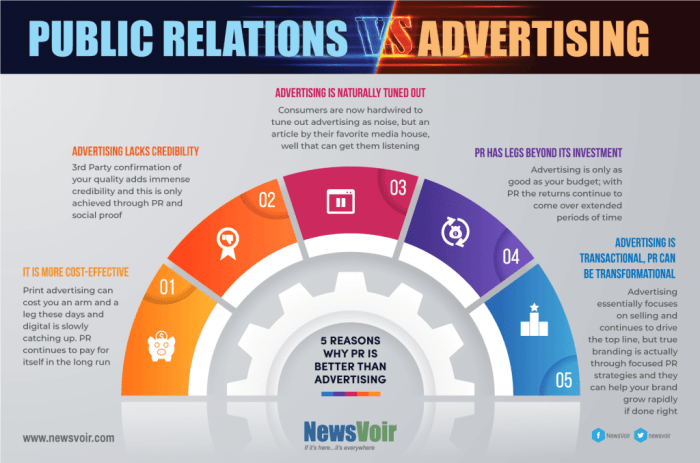
In conclusion, marketing advertising and PR are dynamic and interconnected fields. By understanding the core principles and strategies Artikeld in this guide, you can effectively navigate the complexities of modern marketing, advertising, and public relations. From fundamental marketing concepts to emerging technologies, we’ve provided a comprehensive overview. We hope this guide has provided you with the knowledge and inspiration to craft successful campaigns and build lasting brand value.