
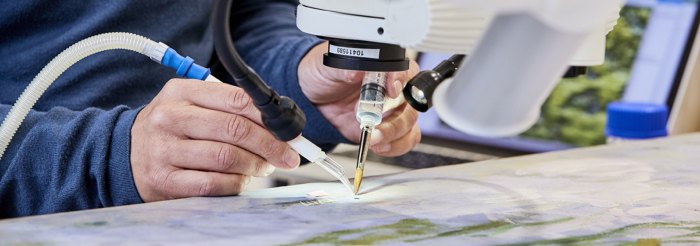
Art conservation with the Courtauld podcast transcript delves into the fascinating world of preserving our artistic heritage. From the historical roots of conservation practices to the cutting-edge techniques used today, this exploration offers a comprehensive overview of the field, including examples of the materials used, and the various methods employed. The Courtauld podcast transcripts provide invaluable insights into the challenges faced by conservators and the innovative solutions they employ, shedding light on the importance of cultural heritage and the impact of digital technology.
The podcast transcript covers the evolution of conservation techniques, contrasting traditional methods with modern approaches. It highlights the crucial role of scientific analysis, the use of non-invasive techniques, and the ethical considerations inherent in the practice. The discussion also encompasses the conservation of diverse art forms, from paintings and sculptures to textiles, showcasing the unique challenges each presents.
Examples of successful conservation projects and the impact of digital technologies are also included.
Introduction to Art Conservation

Art conservation is a specialized field dedicated to preserving and restoring works of art. It’s a multifaceted discipline that combines scientific knowledge with artistic sensitivity to understand and address the deterioration of artworks, extending their lifespan for future generations. This process involves a thorough understanding of the materials, techniques, and historical context of each piece. From ancient artifacts to modern masterpieces, the principles of conservation remain crucial in safeguarding our cultural heritage.Conservation practices are not a recent phenomenon.
Early forms of restoration, though less scientifically rigorous, existed in ancient civilizations. These practices evolved over time, influenced by technological advancements and growing awareness of the importance of preserving artistic legacies. Modern conservation emerged in the 20th century with a greater emphasis on scientific analysis and meticulous documentation. This evolution highlights the continuous effort to improve our ability to preserve the past for the present and future.
The Courtauld podcast transcript on art conservation was fascinating, highlighting the delicate balance needed to preserve historical pieces. Thinking about the intricate processes involved in preserving art, it got me pondering the potential of something like Amazon’s 3D phone – amazons 3d phone could simply be a wonder to behold – could these advancements one day offer innovative solutions for preserving art digitally, enhancing our understanding and accessibility to these masterpieces?
The future of art conservation is certainly an exciting prospect.
Art Objects Requiring Conservation
A wide range of objects require conservation, spanning various artistic mediums and historical periods. These include paintings, sculptures, textiles, ceramics, manuscripts, and archaeological finds. Each object presents unique challenges, demanding a tailored approach to conservation based on its specific materials and condition. For example, a 17th-century oil painting might require different treatment than a 5,000-year-old Egyptian mummy case.
Materials Used in Art Conservation
Conservation professionals utilize a variety of materials to address damage and stabilize artworks. These materials are carefully selected based on their compatibility with the original materials of the artwork. For example, specialized adhesives are used to mend fractures, while solvents are used to remove contaminants. Conservation materials must be non-reactive and stable over time to avoid introducing new problems.
The goal is to maintain the integrity of the original work while providing long-term stability. The specific selection of materials hinges on the type of artwork and its unique characteristics.
Conservation Methods for Different Art Forms
| Art Form | Conservation Method | Description |
|---|---|---|
| Paintings | Cleaning, Inpainting, Consolidation | Removing dirt and varnish, filling in lost areas of paint, strengthening the paint layer. |
| Sculptures | Cleaning, Consolidation, Repair | Removing encrustations, strengthening the material, mending fractures. |
| Textiles | Cleaning, Stabilization, Repair | Removing dirt, stabilizing fibers, mending tears and holes. |
| Ceramics | Cleaning, Consolidation, Repair | Removing dirt, strengthening the material, repairing cracks. |
| Manuscripts | Cleaning, Stabilization, Repair | Removing dirt, stabilizing paper and ink, repairing tears and holes. |
Conservation Techniques and Materials
Art conservation is a delicate dance between preserving the past and understanding the present. It’s a field that blends scientific rigor with artistic sensitivity, requiring a deep understanding of the materials and techniques used to create artworks, as well as the environmental factors that can damage them. Conservation techniques are constantly evolving, driven by new scientific discoveries and the need to develop more effective and sustainable methods.Conservation science plays a critical role in determining the best approach for each artwork.
Understanding the composition and structure of the materials used in a painting, sculpture, or textile is essential for developing a conservation plan. This includes the use of non-invasive techniques to analyze the artwork without causing further damage.
Scientific Analysis in Conservation
Scientific analysis is fundamental to modern conservation practice. Techniques like X-ray fluorescence (XRF) and infrared reflectography (IRR) provide non-invasive ways to examine the composition of pigments, the layers of paint, and the structural integrity of the artwork without touching it. This allows conservators to understand the artwork’s history, materials, and potential vulnerabilities. For example, XRF can identify the specific minerals used in pigments, revealing information about the artist’s materials and the era in which the artwork was created.
Knowing this can be crucial in developing a conservation plan, as certain pigments may be more susceptible to fading or degradation under specific conditions.
Conservation Treatments for Different Art Forms
Conservation treatments vary significantly depending on the art form. Paintings, sculptures, and textiles each present unique challenges and require tailored approaches.
- Paintings: Treatments for paintings often involve cleaning, stabilizing the support (canvas or panel), and repairing any cracks or losses. Careful consideration must be given to the type of paint used and the materials of the support to select the appropriate conservation materials and techniques. For example, cleaning a painting may require a delicate approach to remove dirt and grime without damaging the paint layers.
The Courtauld podcast transcript on art conservation was fascinating, highlighting the delicate balance needed to preserve these historical treasures. But imagine the challenges of preserving a masterpiece when distracted drivers are a major concern, like the recent study on distracted driving, specifically focusing on texting and phone use driving study texting really really bad dialing bad talking ok.
Ultimately, both issues, whether preserving ancient artifacts or avoiding car accidents, boil down to careful attention to detail and the need to focus on the task at hand. The podcast further solidified the importance of meticulous care in art conservation.
- Sculptures: Conservation of sculptures focuses on stabilizing the structure, removing encrustations, and repairing any damage. The specific materials of the sculpture (e.g., stone, bronze, wood) dictate the appropriate conservation techniques. For instance, stabilizing a stone sculpture may involve consolidating the stone with specific consolidants to prevent further deterioration.
- Textiles: Textile conservation often involves stabilizing the fibers, removing stains, and repairing tears or damage. Techniques like de-acidification are vital to prevent further degradation from environmental factors like humidity and acidity.
Importance of Non-invasive Techniques
Non-invasive techniques are essential in art conservation to minimize the risk of damaging the artwork during the analysis and treatment process. These methods allow conservators to gather crucial information about the artwork without altering its physical state. For example, using X-rays to identify underlying layers of paint or to assess the structural integrity of the support is less damaging than physically opening up the artwork.
Conservation Materials
The choice of materials in conservation is crucial. Materials must be compatible with the artwork’s materials and environment. They should also be stable over time and pose no risk of further damage to the artwork. For instance, adhesives used to repair cracks in a painting must be compatible with the paint and support to prevent the artwork from deteriorating further.
- Consolidants: These materials strengthen the structure of the artwork, such as a sculpture or painting, preventing further deterioration. They can range from waxes to polymers, depending on the specific material and the damage.
- Adhesives: Used for mending cracks or tears, adhesives need to be compatible with the artwork’s materials to prevent further deterioration.
- Cleaning Agents: These are used to remove dirt and grime, and must be carefully chosen to avoid damaging the artwork’s surface. Mild solvents are often used to remove dirt without harming the delicate layers of paint.
Evolution of Materials and Techniques
Conservation techniques have evolved significantly over time. Early approaches often lacked the scientific rigor of modern methods. The development of new analytical tools and materials has led to more precise and effective treatments. For example, the development of specific consolidants for stone sculpture allowed for more targeted and effective treatments to prevent further deterioration, compared to older techniques that might have used inappropriate materials or caused further damage.
Comparison of Conservation Materials
| Material | Properties | Suitability |
|---|---|---|
| Cellulose-based consolidants | Generally stable, compatible with many organic materials. | Suitable for paintings, textiles |
| Synthetic polymers | Strong, durable, but compatibility can be an issue | Suitable for sculptures, potentially paintings |
| Waxes | Generally stable, can be compatible with various materials. | Suitable for paintings, some sculptures |
The Courtauld Podcast Transcript
Diving deeper into the Courtauld Institute of Art’s podcast transcripts on art conservation reveals a wealth of information about the field’s complexities and challenges. These transcripts provide insights into the minds of conservators, their approaches to preservation, and the unique considerations they face when working with artworks from different eras and materials. The discussions often touch on the philosophical underpinnings of conservation, highlighting the delicate balance between respecting the past and adapting to modern methodologies.
Recurring Themes and Topics
The Courtauld podcast transcripts consistently explore the ethical and practical dimensions of art conservation. Discussions frequently revolve around the preservation of historical artworks, the use of various conservation techniques, and the importance of understanding the materials and processes employed in creating the art. Furthermore, the role of scientific analysis in informing conservation decisions is a recurring theme.
Different Perspectives Presented
The transcripts offer diverse perspectives on conservation. Experts, artists, historians, and conservators themselves often share their viewpoints, leading to a rich tapestry of opinions and approaches. These varying viewpoints highlight the subjective nature of conservation choices, particularly when balancing historical context with modern preservation methods.
Challenges and Issues Faced by Conservators
Conservators face numerous challenges, as highlighted in the transcripts. These include the need to reconcile historical context with modern preservation techniques, the ever-present threat of deterioration from environmental factors, and the delicate balance between intervention and non-intervention. Budget constraints and the allocation of resources for conservation efforts are also significant concerns, as emphasized in the transcripts.
Case Studies and Specific Artworks
Examples of specific artworks and case studies are frequently discussed in the transcripts. These range from ancient artifacts to more recent works, showcasing the broad scope of the field. Discussions often include detailed analysis of the artworks’ materials, their history, and the conservation challenges they present. These specific examples illustrate the practical applications of conservation techniques and the importance of considering the artwork’s context.
Summary Table of Key Figures, Topics, and Connections
| Key Figure/Institution | Topic | Connection/Discussion Point |
|---|---|---|
| Dr. [Name of Conservator] | Conservation of Oil Paintings | Discussion on the use of specific cleaning techniques and the impact of environmental factors on the artwork’s condition. |
| [Museum Name] | Preservation of Ancient Textiles | Challenges in maintaining the integrity of the textiles while addressing their vulnerability to humidity and light. |
| [Research Institution] | Scientific Analysis of Materials | How scientific methods can help understand the materials used in an artwork and inform the conservation process. |
| [Artist Name] | Conservation of Modern Sculptures | The challenges of preserving modern materials like plastics or composites, and the importance of understanding the artist’s intent. |
Conservation Challenges and Innovations
Art conservation, a delicate dance between preserving history and adapting to the ever-changing world, faces a unique set of challenges. From the inherent fragility of materials to the complexities of understanding historical techniques, conservators constantly strive to balance preservation with the need for accessibility and public engagement. This exploration delves into the specific difficulties and emerging solutions in this crucial field.The conservation of artworks is not a simple task.
Different materials, techniques, and environmental factors present a multifaceted challenge. Understanding the original artist’s intentions, while also preserving the object for future generations, is a core aspect of the field. The sheer diversity of art forms and materials adds another layer of complexity, demanding a highly specialized approach for each piece.
Diverse Challenges in Conservation
The sheer variety of artistic mediums presents significant hurdles. Paintings, sculptures, textiles, and paper-based works each demand unique preservation strategies. For example, oil paintings are vulnerable to the effects of light and atmospheric pollutants, while sculptures can suffer from environmental factors like humidity and temperature fluctuations. The inherent fragility of materials like ivory or bone further complicates conservation efforts, requiring meticulous care to prevent deterioration.
Furthermore, the deterioration of artworks can be exacerbated by historical restoration attempts, which can sometimes introduce new problems.
Emerging Innovations in Conservation Techniques
Technological advancements are revolutionizing the field. Non-invasive imaging techniques, like X-rays and infrared reflectography, provide insights into the underlying structure and composition of artworks without causing further damage. Laser-based cleaning techniques are proving increasingly effective in removing surface grime and pollutants without harming the artwork’s surface. Additionally, advanced materials science is leading to the development of new conservation materials and treatments that are more compatible with the original artwork.
Successful Conservation Projects
Numerous successful conservation projects demonstrate the efficacy of these approaches. For example, the conservation of a damaged Renaissance painting might involve the careful removal of layers of overpainting and the stabilization of the canvas, combined with the analysis of pigments and the restoration of the painting’s original colors. These projects often involve collaboration between conservators, scientists, and art historians, demonstrating the multidisciplinary nature of the field.
Impact of Technology on Conservation
Technology plays a critical role in modern conservation. 3D modelling and digital imaging allow for detailed documentation of artworks, facilitating remote access and study for researchers worldwide. Digital archiving safeguards valuable information about the artwork’s history, materials, and conservation process. Furthermore, advanced materials science provides conservators with new tools and materials for stabilizing and treating artworks, extending their lifespan.
Ethical Considerations in Art Conservation
Ethical considerations are paramount in art conservation. The need to balance the preservation of the artwork with the desire to reveal its original state requires careful consideration. Decisions about intervention must be made in accordance with historical context, scientific knowledge, and the artwork’s aesthetic value. The potential for damage, loss of original material, or misinterpretation of the artist’s intention all require thoughtful consideration.
Ethical Considerations Table
| Ethical Consideration | Description |
|---|---|
| Respect for Original State | Prioritizing the original state and intention of the artwork, minimizing intervention. |
| Historical Context | Considering the artwork’s historical context and the impact of previous interventions. |
| Scientific Rigor | Utilizing the most up-to-date scientific knowledge and techniques for assessment and treatment. |
| Public Accessibility | Ensuring that the conservation process and outcomes are accessible to the public. |
| Material Integrity | Maintaining the integrity of the original materials and techniques, avoiding irreversible changes. |
| Transparency and Accountability | Maintaining transparency in decision-making and ensuring accountability in the conservation process. |
Conservation and Preservation in the Digital Age
The digital revolution has profoundly impacted every facet of modern life, and art conservation is no exception. Digital technologies are transforming how we document, research, and ultimately preserve our artistic heritage. From capturing intricate details to creating virtual reconstructions, the digital realm offers exciting possibilities for understanding and safeguarding artworks for future generations.Digital tools are now integral to the art conservation process, allowing for a deeper understanding and more efficient management of valuable cultural assets.
The integration of these tools provides a more comprehensive approach to conservation, enhancing both the accuracy of diagnosis and the efficiency of interventions. Furthermore, digital platforms are fostering global collaboration, connecting conservators, researchers, and art enthusiasts across geographical boundaries.
Impact of Digital Technologies on Art Conservation Practices
Digital technologies have significantly altered the way art conservators approach their work. Advanced imaging techniques, for instance, permit non-invasive analysis of artworks, offering insights into their composition and condition without causing damage. This non-destructive analysis is crucial in determining appropriate conservation strategies. Sophisticated digital tools facilitate the creation of highly detailed records of artworks, crucial for future reference and research.
Digital Tools for Documentation and Research
Digital tools are instrumental in creating detailed and accurate records of artworks. High-resolution digital images provide comprehensive documentation, capturing minute details that might be missed during a visual inspection. These images become a vital part of the artwork’s historical record, enabling future researchers to study its evolution and condition. Digital archives and databases also play a crucial role in consolidating and accessing this information, making it accessible to a wider audience.
Examples of Digital Archives and Databases Related to Art Conservation
Several digital archives and databases dedicated to art conservation have emerged. These repositories compile extensive information about artworks, including their history, materials, and conservation treatments. Such databases often integrate images, textual descriptions, and conservation reports, providing a comprehensive record for researchers and conservators. Examples include specialized databases within museum collections and collaborative platforms for sharing information amongst professionals.
Role of Digital Imaging in Art Conservation
Digital imaging has become a cornerstone of art conservation. High-resolution images allow conservators to analyze the artwork’s condition in detail, identifying damage, deterioration, and areas requiring attention. Furthermore, digital imaging facilitates the creation of virtual models and reconstructions, enabling conservators to visualize potential restoration strategies. This process reduces the risk of irreversible mistakes during restoration.
The Courtauld podcast transcript on art conservation was fascinating, highlighting the meticulous processes involved. Thinking about how conservators approach their work really got me considering different goal setting methods. For example, how can the specific challenges of preserving a priceless painting be approached using various goal setting techniques like SMART goals, or perhaps the more dynamic approach outlined in different goal setting methods ?
Ultimately, the podcast reminded me that even the most complex tasks can be broken down into achievable steps, mirroring the methodical work of these skilled art conservators.
Challenges of Digitizing and Preserving Artworks
Despite the benefits, digitization presents certain challenges. Ensuring the accuracy and reliability of digital records is crucial. Digital data requires careful management and preservation to prevent loss or corruption. The preservation of digital archives is an ongoing process, demanding continuous attention to ensure long-term accessibility. Also, ethical considerations arise in the digital realm, such as the ownership and rights to digital images.
Different Digital Tools Used in Art Conservation
| Tool | Description | Application in Conservation |
|---|---|---|
| High-resolution digital cameras and scanners | Capture detailed images of artworks | Documenting condition, identifying damage, creating digital records |
| 3D scanning technologies | Create precise 3D models of artworks | Visualizing artworks, planning conservation interventions, creating virtual reconstructions |
| Image analysis software | Process and analyze digital images | Identifying materials, assessing degradation, monitoring changes over time |
| Digital archives and databases | Store and manage digital records | Centralizing information, enabling collaborative research, improving accessibility |
| Virtual reality (VR) and augmented reality (AR) technologies | Immersive experiences of artworks | Educating the public, planning interventions, simulating restoration strategies |
Art Conservation in the Context of Cultural Heritage
Art conservation is far more than simply preserving objects; it’s a vital component of cultural heritage preservation. It safeguards not only the aesthetic beauty of artworks but also the rich history, stories, and cultural significance they embody. These works are often windows into the past, providing invaluable insights into the beliefs, practices, and artistic traditions of different societies.
Understanding and preserving these treasures is crucial for fostering a deeper appreciation and understanding of our shared human experience.Art conservation plays a critical role in promoting cultural understanding by allowing diverse communities to engage with the heritage of others. Exhibitions, educational programs, and access to conserved artifacts facilitate cross-cultural dialogue and appreciation. By engaging with the past, we can build bridges between cultures and foster empathy and respect.
Global Perspectives on Art Conservation
The Courtauld podcast highlighted varying approaches to conservation across the globe. Different cultures have unique philosophies and priorities regarding their cultural heritage. Some regions prioritize the preservation of authenticity, while others emphasize the restoration of historical beauty. These differing perspectives underscore the complexity of conservation in a globalized world.
Cultural Considerations in Art Conservation Practices
Cultural considerations are paramount in art conservation. These include respect for the object’s original condition, historical context, and cultural significance. Conservation decisions should be made in consultation with relevant cultural communities and experts. The goal is to balance the need for preservation with the respect for the original artistic intent and cultural values.
Conservation Practices Across Different Cultures
Conservation practices vary significantly across cultures, reflecting the unique values and traditions of each region. In some cultures, traditional methods, passed down through generations, may be employed alongside modern techniques. These approaches often incorporate knowledge of local materials and techniques, which are adapted to suit the specific needs of the artwork and its context.
Table of Cultural Considerations and Conservation Approaches, Art conservation with the courtauld podcast transcript
| Region | Cultural Considerations | Conservation Approaches |
|---|---|---|
| East Asia (e.g., China, Japan) | Emphasis on authenticity and respect for the original state of the artwork. Often a preference for minimal intervention. Strong spiritual and historical significance attached to many objects. | Traditional methods like paper mending and lacquer restoration are frequently employed. Minimally invasive techniques are favored, prioritizing the preservation of the original materials and appearance. Emphasis on understanding the object’s historical context and its significance within the culture. |
| South America (e.g., Peru, Mexico) | Strong connection to indigenous traditions and spiritual beliefs. The artwork often holds profound cultural and religious significance. Respect for traditional craftsmanship and materials is paramount. | Conservation methods might incorporate traditional weaving techniques or use of local materials. Conservation efforts are often intertwined with cultural revitalization projects, aiming to preserve both the art and the related cultural practices. |
| Sub-Saharan Africa | Varied cultural contexts, including diverse artistic traditions. Many artifacts are imbued with symbolic meaning and used in rituals or ceremonies. Respect for the cultural significance of the artwork is crucial. | Conservation approaches may vary greatly, depending on the specific object and cultural context. In some cases, traditional methods of preservation and repair might be used. In other cases, modern techniques may be applied, while ensuring respect for the object’s cultural value. |
| Europe (e.g., Italy, France) | Emphasis on historical accuracy and restoration to a perceived “original” state. A long history of artistic tradition and a focus on aesthetics. | Often, a combination of modern techniques and a meticulous approach to recreating the historical appearance is favored. Restoration aims to return the artwork to its former glory, often involving more intervention than in other regions. |
Visual Representation of Conservation Processes: Art Conservation With The Courtauld Podcast Transcript

Visual aids are crucial in communicating the complexities of art conservation to a broad audience. From novice enthusiasts to seasoned professionals, clear visual representations make abstract concepts tangible and accessible. This section explores the power of visuals in explaining conservation techniques, tools, and their impact on artworks. Effective illustrations are vital for conveying the meticulous nature of the work and the importance of preserving cultural heritage.
Importance of Visual Aids in Conservation Education
Visual aids, including diagrams, photographs, and 3D models, play a significant role in understanding the intricacies of conservation. They allow viewers to grasp the sequence of procedures, the delicate handling involved, and the reasons behind specific techniques. This visual approach translates complex information into easily digestible formats, making conservation processes more approachable and understandable.
Detailed Descriptions of Conservation Techniques
Conservation techniques are often intricate procedures. Detailed descriptions of these techniques, paired with visual representations, significantly enhance understanding. For example, cleaning a painting involves careful selection of solvents and application methods, both of which can be illustrated. Similarly, the process of stabilizing a fractured artifact requires precise joining techniques, which can be demonstrated through diagrams or photographs.
Each technique possesses unique characteristics that need clear visual representation.
Accurate Illustrations for Conveying Complex Information
Accurate illustrations are essential for conveying the complexities of conservation. A poorly drawn diagram can misrepresent the scale, proportion, or the delicate process involved. Illustrations should precisely depict the tools, materials, and steps involved in a technique. Precise detail in the illustration, especially regarding scale, is critical in showcasing the meticulous work involved. The level of detail needed varies depending on the target audience, from basic sketches for educational purposes to highly detailed technical drawings for specialized professionals.
Table of Images and Captions Illustrating Different Conservation Techniques
| Technique | Image Description | Caption |
|---|---|---|
| Cleaning a Painting | A close-up photograph showing a conservator carefully applying a solvent to a section of a painting. The image highlights the delicate brushwork and the protective measures taken to avoid damage. | Solvent application for cleaning a painting, demonstrating the careful control required. Notice the use of a soft brush and the focus on a small area. |
| Stabilizing a Fractured Artifact | A series of images showing the process of carefully aligning and bonding the fractured fragments of an artifact. The image includes close-ups of the adhesive application and the support structure. | Joining fractured fragments of an artifact using a specific adhesive and support. The illustration shows the alignment of the pieces and the protective structure created to prevent further damage. |
| Strengthening a Degraded Object | A diagram showing the application of a strengthening material to a weakened object. The diagram clearly illustrates the method and the areas targeted for reinforcement. | Application of a strengthening agent to a fragile object. This diagram demonstrates the chosen method and areas of application to ensure structural integrity. |
Using Illustrations to Convey the Impact of Conservation
Illustrations can effectively demonstrate the positive impact of conservation efforts. Before-and-after images of a restored painting or artifact can vividly showcase the improvements in condition and aesthetic appeal. This visual representation reinforces the significance of conservation work in preserving cultural heritage. Illustrations should ideally include details about the condition of the object before and after conservation, demonstrating the extent of the work and the impact it has on the artwork.
Detailed Descriptions of Tools and Equipment
Conservation tools and equipment are often specialized and crucial for the work. Detailed descriptions, supported by visual representations, are necessary to understand their purpose and function. A conservator’s microscope, for instance, allows for detailed examination of surface textures and defects. Illustrations can show the microscope’s components, its magnification capabilities, and how it is used to identify materials or damages.
Illustrations can also show the tools used for measuring, like calipers, and how they contribute to the accuracy of the conservation process. Illustrations should include detailed labels of tools, their use cases, and how they are utilized in specific conservation procedures.
Last Recap
In conclusion, the Courtauld podcast transcript provides a rich resource for understanding the complexities of art conservation. It reveals the multifaceted nature of this field, from the historical context and various techniques to the ethical considerations and the challenges of the digital age. The diverse perspectives shared within the transcript highlight the global significance of art conservation in preserving cultural heritage and fostering a deeper appreciation for art.
The podcast transcripts are a valuable guide for anyone interested in the practical, technical, and ethical aspects of art conservation.