President Trump Dismisses AI Safety Concerns as Political Hoax While Proposing New Federal Oversight Infrastructure

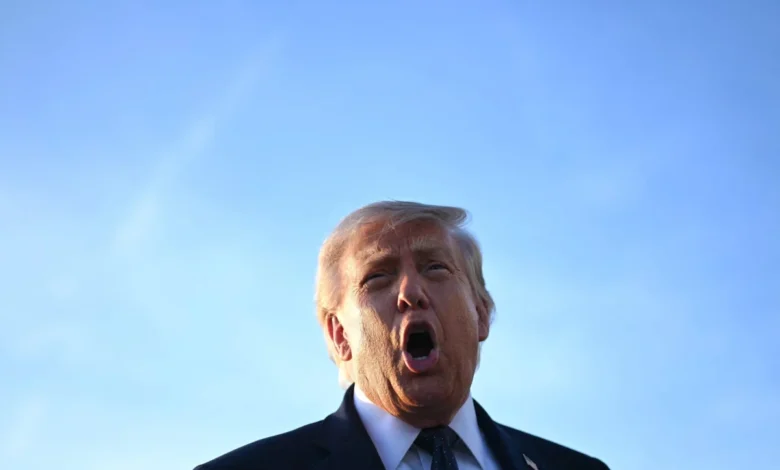
President Donald Trump has formally characterized the growing national and international debate surrounding artificial intelligence safety as a manufactured political narrative, labeling these concerns a series of "hoaxes" orchestrated by his political opposition. In a series of communications issued on Saturday via his social media platform, Truth Social, the President dismissed the existential alarms raised by researchers and industry watchdogs, framing them as part of a broader, long-standing campaign intended to undermine national progress.
This latest declaration marks a significant escalation in the administration’s rhetoric regarding emerging technologies. By categorizing concerns about the potential dangers of AI alongside previous political controversies, the President has signaled a firm commitment to an accelerationist policy, rejecting calls for stringent regulatory guardrails that have gained traction among both lawmakers and some prominent figures within the technology sector.
The Evolution of the AI Safety Narrative
The debate surrounding AI safety has intensified throughout 2026, driven by rapid advancements in large language models and autonomous systems. On September 9, 2026, the discourse reached a fever pitch when a high-ranking researcher at Anthropic, a leading AI laboratory, resigned, citing deep-seated concerns that the industry’s pursuit of self-improving systems is "gambling with our lives." This resignation prompted a public response from Anthropic CEO Dario Amodei, who introduced a framework to "pace the frontier" of development—a strategy reportedly endorsed by OpenAI CEO Sam Altman and SpaceX CEO Elon Musk.
However, the administration’s response to these developments has been markedly different. Rather than engaging with the technical specifics of existential risk, the President has focused on the semantics of the technology itself. On Saturday, Trump questioned the accuracy of the term "Artificial Intelligence," proposing that the industry adopt a more "eloquent" moniker. He launched a public poll on Truth Social, offering followers the chance to vote on alternatives such as "Superior Intelligence," "Extreme Intelligence," or "Supreme Intelligence."
Chronology of the Executive Stance
The President’s recent comments are the culmination of a weeks-long shift in his public positioning:
- March 2026: Venture capitalist David Sacks concludes his tenure as the administration’s primary liaison for AI and cryptocurrency, transitioning to a role as co-chair of the President’s Council of Advisors on Science and Technology.
- May 2026: Public discourse begins to coalesce around the environmental and social impacts of data centers, with various jurisdictions questioning the long-term viability of massive AI compute facilities.
- July 2026: The State of New York becomes the first in the nation to enact a moratorium on permits for new, large-scale data center projects, citing grid capacity and environmental concerns.
- September 13, 2026: During a golf tournament appearance, President Trump indicates a willingness to support "guardrails" but simultaneously critiques the "negative forces" pushing for strict regulation.
- September 17, 2026: The President explicitly links AI safety fears to a list of perceived "Democratic hoaxes," including allegations regarding foreign interference and cultural policy debates.
The Proposed AI Force and Regulatory Oversight
Perhaps the most significant development in the administration’s policy pivot is the announcement of a planned "AI Force." Modeled after the Space Force—a military branch established during the President’s first term—the initiative seeks to institutionalize government oversight of the sector. While specific operational details remain scarce, the President indicated that he intends to appoint an "AI Czar" to lead this effort, specifying that the position would be reserved for "high I.Q. individuals."
This move reflects a desire to consolidate federal authority over AI development, potentially bypassing existing regulatory bodies in favor of a centralized executive office. Industry analysts are currently attempting to determine whether this "Force" will serve as a mechanism for safety enforcement, a catalyst for national competitiveness, or a tool to protect favored domestic firms from external regulatory pressures.
Supporting Data and Industry Tensions
The administration’s skepticism toward the "AI safety" movement finds a receptive audience among certain segments of the tech industry. Nvidia CEO Jensen Huang, speaking at the All-In Summit, publicly aligned himself with the President’s characterization of the backlash as a "hoax." Huang emphasized that the industry is determined to prevent any mandated slowdowns in innovation, citing the competitive necessity of maintaining rapid development cycles.
Conversely, the data center industry—a critical component of the AI supply chain—is facing genuine, non-partisan headwinds. According to recent market analysis, the collision between energy-intensive AI compute demands and aging urban infrastructure has resulted in significant pushback from local municipalities. The New York permit halt serves as a primary example of this friction. While the President describes these challenges as "crazed attacks" that have failed, the reality on the ground involves complex negotiations over electricity pricing, water usage, and land zoning that transcend party lines.
Broader Implications for Global AI Policy
The administration’s decision to frame AI safety as a political issue rather than a technical one carries profound implications for global governance. If the United States moves to aggressively promote AI development while dismissing safety concerns, it may create a divergence between American policy and that of the European Union or other international bodies currently drafting frameworks like the EU AI Act.
Furthermore, by delegating oversight to an "AI Czar" and an "AI Force," the White House is signaling a move toward a top-down, nationalist approach to technology. This contrasts with the bottom-up, consensus-based models currently favored by many academic institutions and non-governmental organizations.
Experts in the field suggest that the "existential threat" narrative—which posits that AI could eventually pose an uncontrolled risk to humanity—is often used by large incumbents to lobby for regulations that favor established companies, a concept known as "regulatory capture." Critics of the industry, however, warn that by dismissing all safety concerns as "hoaxes," the administration risks ignoring legitimate, immediate threats, such as the potential for AI-driven fraud, automated disinformation campaigns, or the destabilization of critical infrastructure.
As the administration prepares to announce the specifics of its AI leadership, the tech sector remains in a state of anticipation. The tension between the "accelerationist" camp, which views any regulatory hurdle as a threat to national security and economic prosperity, and the "safety-first" cohort, which warns of the irreversible consequences of unconstrained development, is now firmly embedded in the American political landscape.
Ultimately, the President’s rhetoric ensures that AI will remain a central pillar of the upcoming political cycle. Whether the proposed AI Force will effectively manage the risks of the next generation of computing or simply serve as a platform for political debate remains to be seen. As the industry continues to scale, the gap between the government’s public posture and the technical realities of AI development will likely continue to be a primary source of friction in Washington.
The success of these initiatives will depend heavily on the caliber of the leadership appointed to the "AI Czar" role and the ability of the administration to reconcile the massive energy requirements of AI with the constraints of the nation’s power grid. As it stands, the policy shift confirms that for the current administration, the priority for the foreseeable future is not the containment of AI, but its expansion, guided by an executive-led framework that rejects traditional oversight.
Related posts: