Mastering Answer Engine Optimization: The Strategic Evolution of Search Visibility in the Age of Artificial Intelligence

The landscape of digital discovery is undergoing a seismic shift as users increasingly bypass traditional blue-link search results in favor of synthesized, AI-generated responses. Data from Wix Studio reveals a significant surge in demand, with monthly unique visitors to major answer engines climbing from 634 million in Q1 2025 to 904 million in Q1 2026—a growth rate exceeding 40% in just one year. For marketers and business owners, this transition necessitates a fundamental pivot toward Answer Engine Optimization (AEO), a discipline that optimizes web content specifically for ingestion and citation by Large Language Models (LLMs).
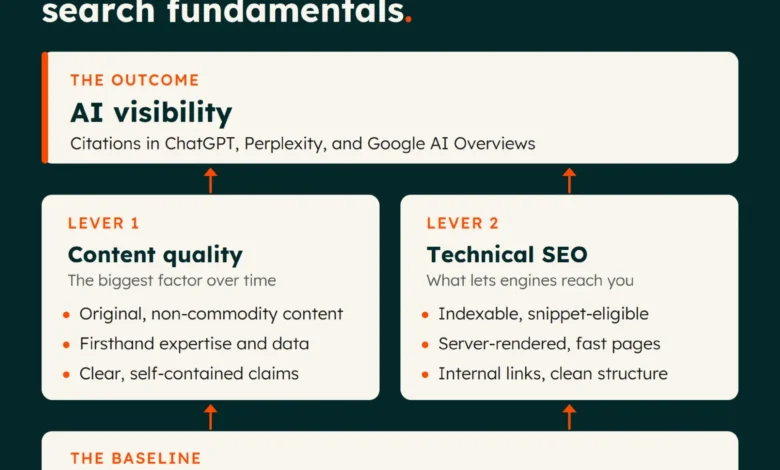
Despite the rapid adoption of AI-driven search, industry analysts and search engineers maintain that AEO is not a replacement for Search Engine Optimization (SEO), but rather an extension of it. The technical infrastructure governing AI Overviews, such as those found in Google’s Gemini-powered systems or ChatGPT’s search integration, remains deeply rooted in the traditional crawl-and-index paradigm. Because AI models rely on established web indexes to verify facts and gather context, a website that fails to adhere to fundamental SEO standards will effectively remain invisible to generative AI.
The evolution of search can be traced back to the introduction of Large Language Models into the public sphere in late 2022. By 2024, the integration of generative AI into search interfaces became a primary focus for tech giants. Throughout 2025, the industry saw the transition from "experimental" AI search features to primary search interfaces. The current state of the industry, as of mid-2026, reflects a mature ecosystem where citation accuracy, source reliability, and technical accessibility have become the primary currency for digital traffic.
The Technical Foundation of AI Visibility
At the core of AI search visibility is the ability of an engine to crawl, parse, and trust a given domain. Google has explicitly clarified that its AI Overviews operate on the same core search systems that power traditional organic results. This means that technical failures—such as blocking crawlers, poor site speed, or reliance on complex JavaScript that fails to render—will disqualify a page from being cited.
Technical data highlights the importance of site performance. Research by SE Ranking indicates that pages with a First Contentful Paint (FCP) of under 0.4 seconds generate significantly higher citation rates—averaging 6.7 citations in ChatGPT—compared to 2.1 citations for pages exceeding 1.13 seconds in load time. Furthermore, the reliance on client-side rendering poses a distinct risk. While major crawlers are increasingly adept at rendering JavaScript, many auxiliary AI crawlers remain limited to raw HTML. Consequently, content that is not server-side rendered may be invisible to the very models designed to cite it.
The Rise of People-First Content Standards
While technical health is the gatekeeper, content quality is the ultimate arbiter of citation. AI models are trained to prioritize "non-commodity" content—material that offers unique data, proprietary research, or expert perspective. Commodity content, which simply repackages widely available information, provides little incentive for a model to cite a specific source, as the model can synthesize that information from its existing training data without attribution.
Quantitative analysis supports the "expertise-first" approach. Pages that feature specific expert quotes and substantial data points consistently outperform generic text. Data shows that content containing 19 or more data points averages 5.4 citations, while data-light content struggles to maintain an average of 2.8. The implication is clear: to secure a citation, a website must provide original value that the model cannot autonomously generate.
Structuring Data for Machine Readability
Structured data serves as a bridge between human-readable text and machine-understandable facts. By implementing schema markup that accurately reflects the content on the page, site owners provide a clear, unambiguous map for search algorithms. However, this must be done with strict adherence to accuracy. Manipulating schema to reflect claims not supported by the visible text constitutes a form of cloaking, which can result in penalties or complete exclusion from indexation.
Snippet controls also play a vital role. Directives such as nosnippet or max-snippet function as hard gates for AI inclusion. Because AI models use snippets to generate their answers, restricting these elements effectively locks a page out of the generative search experience. Site administrators are encouraged to conduct an audit of their robots.txt and meta tags to ensure that overly restrictive settings are not inadvertently suppressing their visibility.

Cross-Platform Nuances: Perplexity vs. ChatGPT
A critical finding in the current search ecosystem is the lack of uniformity across different platforms. Perplexity, for instance, operates as a high-volume citation engine, often sourcing information from over 10 different URLs per query. It shows a distinct preference for discussion-based platforms, including Reddit, LinkedIn, and G2, which account for a substantial portion of its citation pool. In contrast, ChatGPT maintains a more selective stance, favoring long-form, authoritative articles and providing a lower volume of sources per answer.
Data from Fan Out indicates that only about 7.7% of cited URLs appear across multiple major engines. This fragmentation means that an AEO strategy cannot be "one-size-fits-all." A page that performs exceptionally well in Perplexity’s research-heavy environment may receive zero traction in Google’s AI Overviews. Consequently, content teams must diversify their approach, tailoring specific pages to the unique tendencies and source preferences of different LLMs.
The Workflow of Modern Answer Engine Optimization
Transitioning to an AEO-ready strategy requires a repeatable, six-step workflow:
- Entity Mapping: Identify core brand and product entities. Map these to the specific questions potential customers are asking, ensuring the site content addresses these queries directly.
- Answer-First Drafting: Abandon the traditional "inverted pyramid" style in favor of an "answer-first" format. Address the primary question in the first 40 to 60 words of a section.
- Structured Data Implementation: Deploy schema that mirrors the page content, focusing on providing context that helps the machine interpret the data correctly.
- Rigorous QA: Before publishing, verify that the page is fully crawlable, that all primary content is rendered in server-side HTML, and that the page passes standard schema validation.
- Baseline Benchmarking: Establish a clear starting point for visibility metrics before a page goes live to allow for future performance tracking.
- Periodic Refresh Cycles: Implement a maintenance cadence. AI engines prioritize current, accurate data; therefore, outdated statistics or examples should be refreshed on a set schedule to maintain citation relevance.
Addressing Common Misconceptions
Several myths regarding AEO have permeated the marketing industry. One such misconception is the utility of an llms.txt file. Current evidence suggests that this file has no meaningful impact on citation frequency and, in some cases, may hinder the accuracy of the model’s predictive performance. Additionally, there is no evidence to support the idea that specialized, proprietary markup is required for Google AI Overviews; standard, clean SEO practices remain the most effective vehicle for AI visibility.
Future Implications and Strategic Evolution
The rapid growth of answer engines signifies a permanent change in consumer behavior. Users are shifting from "searching for links" to "asking for answers." For businesses, this means the competitive landscape is no longer just about ranking on the first page of Google—it is about being the primary source of truth within an AI’s response.
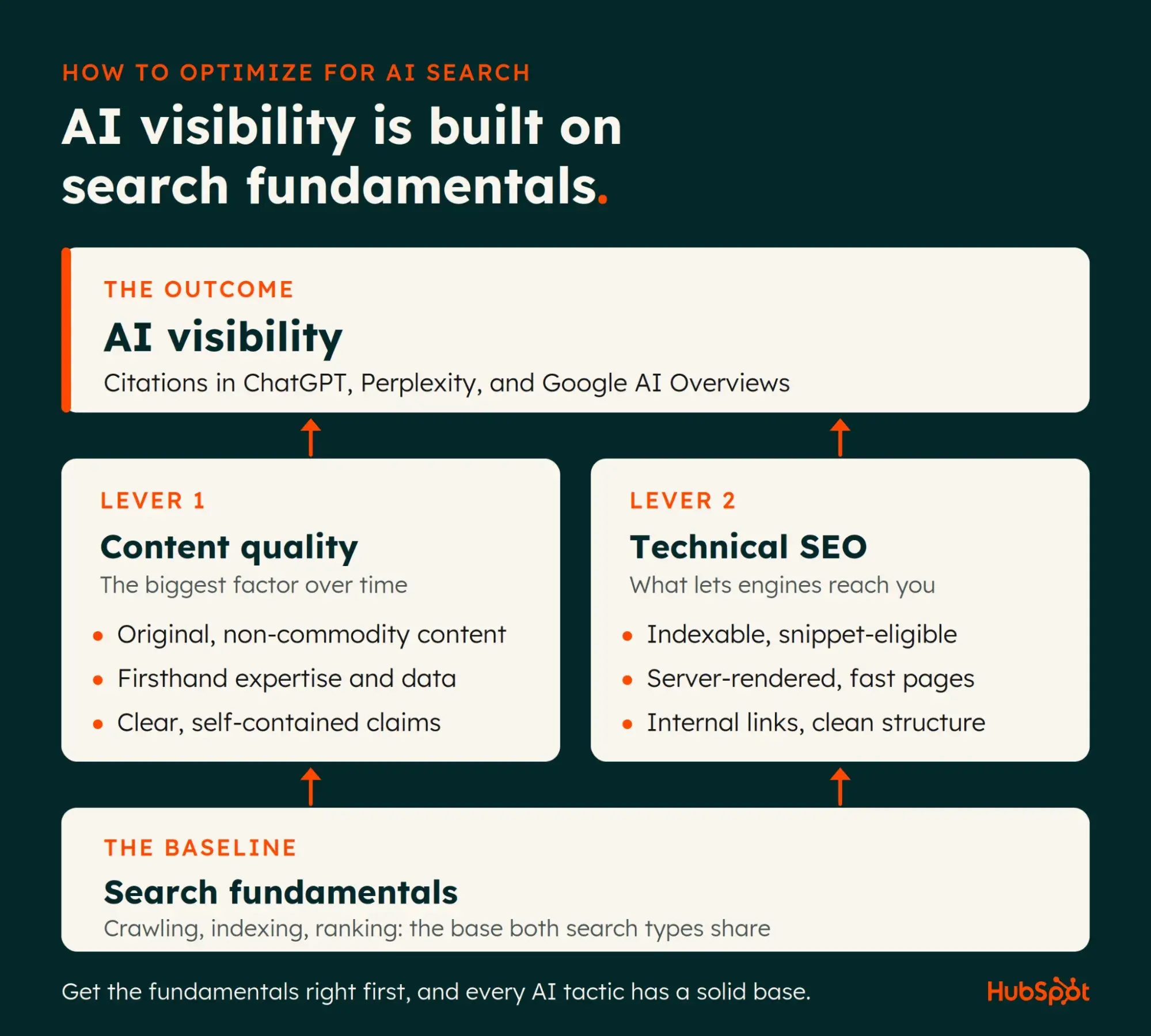
The long-term impact on digital marketing budgets and human capital is significant. Roles are shifting from traditional link-building to high-level content engineering and data-driven entity management. As LLMs become more sophisticated, the importance of "firsthand experience" and "verified expertise" will only grow. Organizations that build their search strategy on a foundation of original research and high-quality technical standards will be best positioned to thrive in an environment where authority and accuracy are the primary drivers of discovery.
As the industry moves into the latter half of 2026, the focus must remain on adaptability. While the underlying technology of AI search will continue to evolve, the core requirement—providing value that is worth citing—remains the constant variable. By treating AEO as a rigorous, iterative discipline rather than a one-time setup, brands can ensure their content remains a cornerstone of the next generation of digital search.
Related posts: