
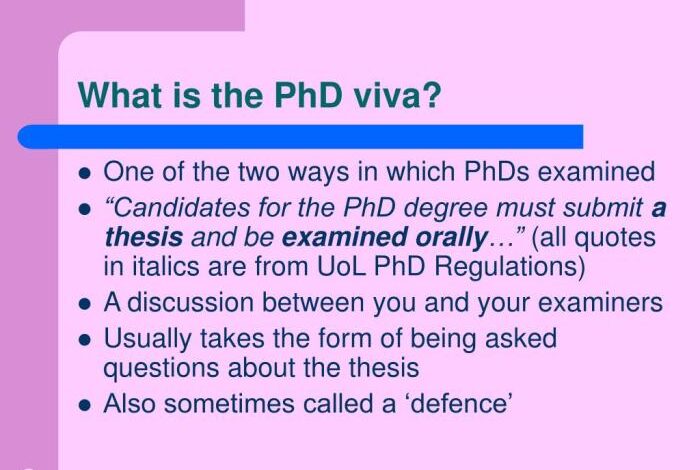
5 tips for passing your phd viva. Navigating the PhD viva can feel daunting, but with the right preparation, you can confidently ace this crucial step. This guide offers practical advice, covering everything from organizing your materials to mastering your subject matter, developing strong communication skills, understanding the viva process, and utilizing resources effectively. We’ll also address managing the stress and anxiety that often accompanies this significant milestone.
This comprehensive resource is designed to equip you with the tools and strategies necessary to excel in your PhD viva. We’ll explore structured methods for organizing materials, providing practice scenarios, and analyzing past viva experiences. Mastering your subject matter, developing effective communication skills, and understanding the process are also key elements. Finally, we’ll equip you with useful resources and techniques for managing stress and anxiety.
Preparing for the Viva: 5 Tips For Passing Your Phd Viva
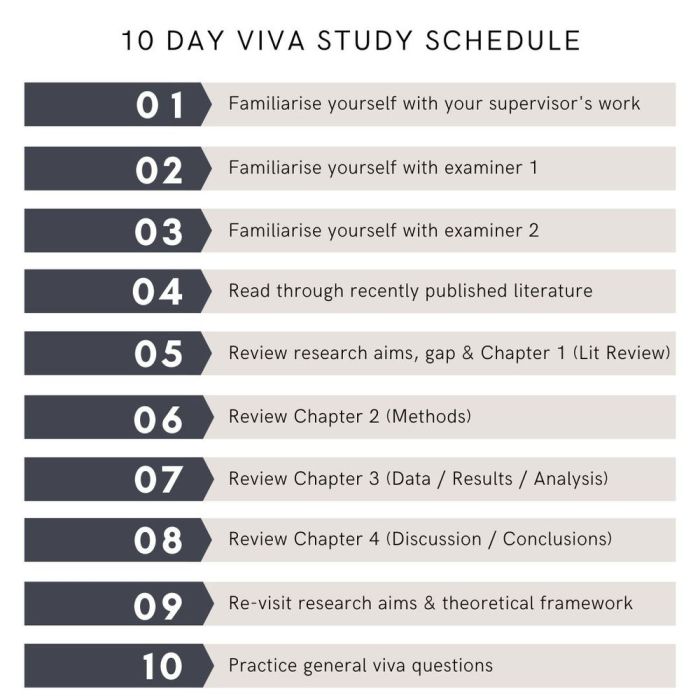
The PhD viva is a crucial step in the academic journey. It’s a culmination of years of research and study, demanding meticulous preparation beyond simply knowing your thesis. This phase requires a structured approach to organizing materials, simulating scenarios, and understanding the examiners’ expectations. Effective preparation significantly increases your confidence and the likelihood of a successful outcome.A successful viva hinges on a combination of deep knowledge, clear communication, and a demonstrable understanding of the research process.
Thorough preparation in these areas can ease anxiety and transform the experience from a potential hurdle to a significant achievement.
Organizing Viva Materials
Thorough organization of materials is critical for a smooth and effective viva. A well-structured system allows for quick access to relevant information, reducing stress and ensuring a confident presentation. A dedicated folder or digital system should categorize your thesis, research data, supporting documents, and publications. Sub-folders can organize chapters, appendices, and frequently referenced materials, streamlining the process.
Consider using color-coded tabs or tags for quick visual reference. This organized structure will make navigating the viva process considerably easier.
Simulating Viva Scenarios
Practicing different viva scenarios is essential for building confidence and anticipating potential questions. Rehearsing with peers, mentors, or professors allows you to refine your responses and address areas needing improvement. This practice helps you become familiar with the format, tone, and style of questioning common in viva settings. Simulations should incorporate diverse scenarios: challenging questions, unexpected critiques, and hypothetical debates on your research findings.
A simulated viva with a focus on challenging questions is invaluable for improving your argumentation and response skills.
Understanding Examiner Expectations
Understanding the examiners’ expectations is crucial. Research their background, expertise, and past publications. This insight helps anticipate the types of questions they might ask and allows you to tailor your responses accordingly. Examiner profiles provide valuable information about their research interests and potential areas of focus. Examining the scope of their publications can help anticipate their areas of interest and likely questions.
By understanding their perspective, you can tailor your presentation to address their specific concerns and expectations.
Reviewing Past Viva Experiences
Learning from past viva experiences is vital. If available, reviewing transcripts or recordings of past vivas can offer invaluable insights. Analyze the areas where the candidate excelled and the areas needing improvement. Identify common themes in challenging questions and develop strategies for addressing them. This focused review provides a blueprint for addressing potential challenges.
Focus on the strengths and weaknesses of previous presentations to guide your own practice.
Checklist for Thesis and Materials Review
A comprehensive checklist is a powerful tool for ensuring that all aspects of your thesis and supporting materials are in order before the viva. This will allow for a structured and focused review. This structured approach will prevent any last-minute surprises and help build confidence. The checklist should cover:
- Thesis Clarity: Ensure your thesis is clearly articulated and addresses the research question effectively. Verify that all sections of the thesis follow a logical flow, enhancing the overall presentation.
- Data Validity: Verify the accuracy and reliability of your research data and methodologies. Thorough analysis and validation are crucial to demonstrating the robustness of your research.
- Supporting Materials: Review all supporting materials, including figures, tables, and appendices. Ensure accuracy and clarity in all supplementary materials. This ensures that all supporting materials are accurate and enhance the overall presentation.
- References: Verify the completeness and accuracy of all citations and references. Thorough referencing strengthens the validity of your research.
- Communication: Practice articulating your research findings clearly and concisely. Ensure your language is precise and your presentation is well-structured.
Mastering Your Subject Matter
Succeeding in your PhD viva hinges significantly on your command of the research. A thorough understanding of your work, coupled with the ability to articulate it clearly and concisely, will greatly enhance your confidence and performance. This involves not only knowing the specifics of your research but also anticipating potential questions and formulating responses. This section dives deep into techniques for organizing your knowledge, identifying potential weaknesses, and anticipating examiner queries.A robust grasp of your research is paramount.
It’s not just about memorizing facts; it’s about understanding the underlying concepts, the connections between different elements, and the broader implications of your work. This understanding will allow you to address complex questions with clarity and precision.
So, prepping for your PhD viva? Five solid tips can help you ace it. First, know your thesis inside and out. Second, anticipate potential questions. Third, practice your presentation.
Fourth, understand the context of your research, even something as seemingly unrelated as recent bribery investigation rumors affecting major tech companies like ZTE, like this one concerning ZTE. Fifth, remain confident and articulate. Remember, a strong understanding of your work is key to a successful viva.
Organizing Key Concepts
A well-structured approach to your research is essential. This involves categorizing key concepts into a hierarchical structure, creating concise summaries, and using visual aids like flowcharts or mind maps to illustrate connections between different aspects of your work. This organized format will enable you to quickly locate and recall crucial information during the viva. The key is to create a system that makes the information easily accessible and understandable.
Identifying Potential Weaknesses
Proactively identifying potential weaknesses in your research is crucial. This involves critically reviewing your methodology, data analysis, and conclusions. Look for inconsistencies, potential flaws, or areas where your research might be vulnerable to criticism. This proactive approach allows you to address these weaknesses before the viva, thereby demonstrating a thorough understanding of your work and its limitations.
Don’t shy away from acknowledging areas where your research might be less robust; it shows intellectual honesty.
Anticipating and Addressing Potential Questions
Anticipating potential questions from examiners is a vital part of viva preparation. Think about the different perspectives your examiners might have and formulate answers to questions about your methodology, results, limitations, and future directions. Consider the possible challenges to your findings and prepare responses that address these potential objections. This proactive approach fosters confidence and ensures you can handle unexpected queries.
Presenting Complex Data
Different approaches exist for presenting complex data, ranging from detailed tables and graphs to concise summaries and conceptual diagrams. Choosing the appropriate method depends on the specific data and the message you wish to convey. A well-chosen presentation style ensures that your data is clearly understood and that its implications are readily apparent. Consider the most effective way to highlight the key findings and conclusions.
Identifying and Practicing Answers to Common Viva Questions
Recognizing common viva questions, such as those regarding methodology, limitations, and future research directions, allows for targeted practice. Prepare detailed answers for these anticipated questions, focusing on the rationale behind your choices, the potential limitations, and the planned avenues for future research. Practicing these answers in simulated viva scenarios will build confidence and ensure smooth communication during the actual examination.
Developing Your Communication Skills
A strong viva performance hinges significantly on effective communication. Beyond a deep understanding of your research, conveying your ideas clearly and confidently to the examiners is crucial for a positive outcome. This involves mastering techniques for presenting complex information concisely, responding to challenging questions with poise, and maintaining a composed demeanor throughout the examination. Effective communication transcends simple clarity; it involves a strategic approach that adapts to the specific nuances of the examiners’ personalities and expectations.The viva is not merely an academic exercise; it’s a demonstration of your ability to articulate your research, defend your arguments, and engage in intellectual discourse.
Strong communication skills enable you to effectively showcase your knowledge and understanding, while a lack of clarity or confidence can hinder your presentation and potentially impact your overall performance. Therefore, developing these skills is an essential component of successful viva preparation.
Effective Strategies for Communicating Complex Ideas
Clear communication is paramount during the viva. Break down complex ideas into smaller, more manageable components. Use visual aids, such as diagrams or charts, to illustrate key concepts. Employ precise language and avoid jargon or technical terms unless absolutely necessary. Explain the significance of your research findings in a way that is accessible to a broad audience.
Use analogies or relatable examples to make abstract concepts more understandable. This approach ensures that your message is not only conveyed but also comprehended by the examiners.
Techniques for Confidently Responding to Challenging Questions
Anticipating potential questions and preparing thoughtful responses is crucial. Practice answering common viva questions and formulating concise, well-structured answers. If a question is unclear, politely ask for clarification before attempting to answer. Don’t be afraid to admit if you don’t know the immediate answer, but offer to research or elaborate further. Active listening and acknowledging the question demonstrate respect for the examiner’s inquiry.
Use “I” statements to express your own understanding and perspective while avoiding defensive or dismissive language.
Aceing your PhD viva? Five key tips will help you nail it! Preparation is key, of course, but understanding the nuances of the academic landscape, like the evolving dynamics of freedom of online speech in a post-WikiLeaks world, especially how it shapes public discourse and influences research , is also crucial. Solid argumentation and clear communication will be your best allies as you defend your thesis.
Ultimately, confidence and a well-structured defense are the ultimate weapons in your viva arsenal.
Maintaining Composure and Confidence During the Viva
Maintaining composure is vital. Practice deep breathing exercises and relaxation techniques to manage anxiety. Maintain a positive and professional demeanor, even under pressure. Acknowledge that the examiners are interested in your work and understanding your research, not necessarily in finding fault. Avoid fidgeting or displaying distracting behaviors.
Maintain eye contact, but avoid staring intensely, as this can appear confrontational. Remember that a calm and collected approach fosters trust and credibility.
Common Communication Pitfalls and Solutions
Jargon overuse can make your presentation difficult to follow. Replace technical terms with simpler explanations whenever possible. Speaking too quickly or too slowly can disrupt the flow of your communication. Practice speaking at a moderate pace, allowing time for pauses and emphasis. Lack of clarity or concise articulation can make your arguments weak.
Ensure your ideas are logically structured, clearly articulated, and well-supported. Avoid rambling or digressing from the core topic. By proactively addressing these common pitfalls, you can strengthen your communication skills.
Tailoring Your Communication Style to Different Types of Examiners
Examiners possess diverse communication preferences. Observe their body language and reactions during the viva to gauge their responses and adjust your communication style accordingly. A more formal or structured approach might be suitable for a traditional academic examiner. A more relaxed and conversational approach might be appropriate for a more approachable or informal examiner. Adjust your tone and language to match the examiner’s preferences.
Aceing your PhD viva? Five solid tips can help! Practice your presentation, anticipate questions, and know your research inside and out. Crucially, understanding the technology behind advancements like the innovative head-mounted displays discussed in articles like ” is that a computer youre wearing on your head ” can add a layer of depth to your responses.
Ultimately, confidence and thorough preparation are key to a successful viva.
This adaptability demonstrates respect and ensures that your communication style resonates with the individual examiner.
Understanding the Viva Process
Navigating a PhD viva can feel daunting, but a clear understanding of the process can significantly reduce anxiety and increase confidence. This section delves into the intricacies of the viva procedure, empowering you with the knowledge to confidently face the challenges and successfully complete this crucial stage of your academic journey. Knowing the expectations and roles of each participant is key to a smooth and productive viva.
The Structure of the Viva Process
The viva process, while varying slightly between institutions, typically follows a structured format. Understanding this structure allows you to anticipate the flow and prepare accordingly. This often involves a set of predefined questions and phases, enabling you to approach each part with a well-defined strategy. It’s important to understand that the viva is a dialogue, a conversation about your work, not an interrogation.
Roles of Participants
The viva panel, typically composed of your supervisor, external examiners, and sometimes internal examiners, plays a critical role in evaluating your research. Each participant has a specific role in the process. The supervisor provides context, often acting as a facilitator, while the external examiners bring an objective and external perspective to the assessment. The internal examiner, if present, often represents the institution’s perspective and may focus on specific aspects of your research.
Your role, as the candidate, is to demonstrate your understanding, articulate your research, and answer questions with clarity and confidence.
Common Phases of a PhD Viva
The viva usually comprises several phases. The initial phase often involves a presentation of your research, followed by a series of questions and answers. This presentation is your opportunity to demonstrate your grasp of the subject and your ability to communicate your research effectively. Subsequent phases might involve more focused questioning on specific aspects of your work, delving deeper into the methodology, findings, and implications of your research.
The Importance of Active Listening and Thoughtful Responses, 5 tips for passing your phd viva
Active listening is crucial during the viva. Paying close attention to the questions posed, both in the tone and the specifics, allows for a more thoughtful and targeted response. A well-considered response, demonstrating your understanding of the query, often reflects well on your critical thinking skills and research acumen. Resist the urge to rush into an answer; take a moment to process the question fully before responding.
Examples of Respectful and Professional Communication
Maintaining a respectful and professional demeanor throughout the viva is essential. For instance, if you’re unsure about a question, acknowledge your uncertainty and indicate your willingness to explore the matter further. Avoid interrupting the panel members; allow them to complete their questions before responding. A clear and concise response, delivered with confidence and respect, demonstrates professionalism and a deep understanding of your research.
Utilizing Resources Effectively
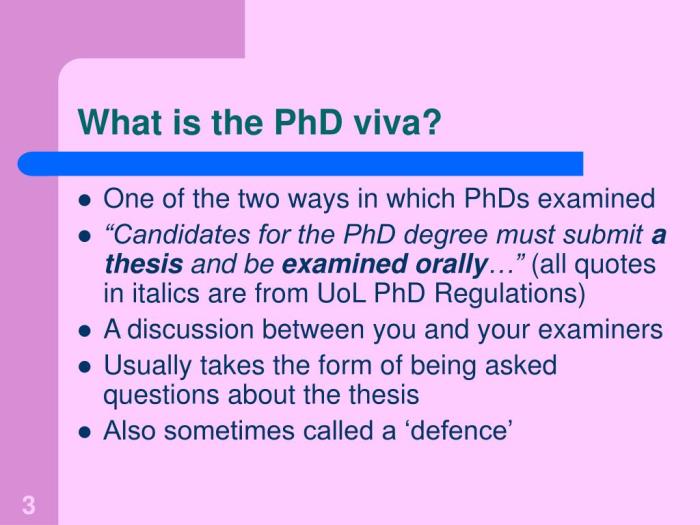
Successfully navigating a PhD viva requires more than just mastering your subject. A strategic approach to utilizing available resources is crucial for building confidence and demonstrating a comprehensive understanding. This involves not just passively absorbing information but actively engaging with diverse materials and feedback to hone your presentation skills and address potential weaknesses.Effective resource utilization empowers you to synthesize knowledge, anticipate potential questions, and refine your arguments, ultimately increasing your chances of a successful viva.
This approach goes beyond simply memorizing facts; it emphasizes understanding the ‘why’ behind your research and the context within which your work sits.
Resource Types for Viva Preparation
A well-rounded approach to viva preparation involves exploring a variety of resources. This includes formal guides, peer-reviewed articles, online communities, and successful viva examples. By utilizing a combination of these resources, you can gain valuable insights, improve your understanding of the process, and develop a strong foundation for your viva.
| Resource Type | Description | Benefits | Example |
|---|---|---|---|
| Books | Comprehensive guides on PhD viva preparation, offering structured approaches and practical strategies. | Provide in-depth analysis of viva strategies and common pitfalls, helping candidates develop a robust understanding of the process. | “The Complete Guide to Passing Your PhD Viva” by [Author Name] |
| Articles | Insightful articles from academic journals or online publications that examine successful viva experiences and highlight common themes. | Offer diverse perspectives on viva preparation, providing a wider range of strategies and approaches to consider. | Articles from journals like “Higher Education,” “The Educational Researcher,” or similar academic publications. |
| Websites | Online forums and communities specifically designed for PhD candidates, enabling networking and the sharing of experiences and advice. | Provide a platform for interaction, enabling candidates to learn from each other’s experiences, ask questions, and receive feedback. | ResearchGate, Academia.edu, or specialized PhD forums. |
Strategies for Effective Online Research
Online resources are invaluable tools for viva preparation. However, navigating the vast expanse of information requires a strategic approach.Effective online research involves using targeted s, filtering results by publication date, and critically evaluating the credibility of sources. Look for resources that provide practical advice and offer examples of successful viva experiences. Don’t simply collect information; analyze it and synthesize it to strengthen your understanding.
Utilizing Successful Viva Presentations
Examining examples of successful viva presentations provides valuable insights into effective communication, confident delivery, and thoughtful responses to questions.These examples can serve as a benchmark for your own preparation. Pay close attention to the structure of the presentations, the clarity of the arguments, and the candidate’s ability to engage with the examiners.
Accessing and Utilizing Feedback
Seeking and incorporating feedback from previous viva experiences is a critical aspect of preparation.Feedback from mentors, peers, or individuals who have successfully navigated the viva process can provide invaluable insights and help identify areas for improvement. Actively seek out opportunities to receive constructive criticism on your presentations and address any weaknesses identified.
Managing Stress and Anxiety
The PhD viva is a significant hurdle, and the pressure to perform can lead to significant stress and anxiety. Understanding how to effectively manage these emotions is crucial for a successful outcome. This isn’t about eliminating stress entirely, but about harnessing it constructively, transforming it into focused energy.Effective management of stress and anxiety is not a one-size-fits-all approach.
The techniques discussed below provide a framework for personalized strategies. Experiment with different methods to discover what works best for you.
Effective Stress Management Techniques
Stress management involves a multifaceted approach. Employing various strategies can help you navigate the pressures of the viva and maintain a calm and focused state of mind. By integrating these strategies into your preparation, you equip yourself with the tools to manage stress effectively.
- Mindfulness and Meditation: Practicing mindfulness and meditation can help calm the mind and reduce anxiety. These techniques involve focusing on the present moment, acknowledging thoughts and feelings without judgment. Regular practice can train the mind to respond to stressful situations with greater composure.
- Relaxation Techniques: Deep breathing exercises, progressive muscle relaxation, and guided imagery are powerful relaxation techniques. These techniques help to lower heart rate and blood pressure, promoting a sense of calm and reducing physical tension.
- Healthy Lifestyle Choices: Prioritizing sleep, nutrition, and regular exercise is vital. Adequate sleep allows the body and mind to recover, while a balanced diet provides sustained energy. Regular physical activity releases endorphins, which have mood-boosting effects.
Staying Calm and Focused During the Viva
Maintaining composure during the viva is essential for a positive outcome. Developing strategies to manage anxiety and stay focused is a crucial part of preparation. This section provides practical strategies for maintaining focus and calmness.
- Visualization: Visualizing a successful viva can build confidence and reduce anxiety. Imagine yourself answering questions confidently and articulating your research effectively.
- Positive Self-Talk: Replace negative thoughts with positive affirmations. Remind yourself of your knowledge and preparation. Focus on your strengths and past successes.
- Breaking Down the Task: Viewing the viva as a series of manageable questions can reduce feelings of overwhelming pressure. This strategy allows you to approach each question with a sense of control.
Building Confidence and Resilience
Building confidence and resilience is key to approaching the viva with a positive mindset. These qualities are crucial for navigating challenging situations and maintaining a sense of control.
- Seek Support: Talking to friends, family, or mentors can provide emotional support and reassurance. Share your anxieties and concerns to gain perspective and reduce feelings of isolation.
- Practice Active Listening: Actively listening to the viva examiners demonstrates engagement and respect. It shows that you value their input and are prepared to respond thoughtfully.
- Preparation is Key: Thorough preparation is essential for building confidence. Familiarizing yourself with the questions and answers to possible questions will reduce uncertainty.
Dealing with Unexpected Questions
Unexpected questions can be daunting, but preparation can make them less intimidating. Developing strategies to handle the unexpected is a key component of viva success.
- Stay Calm and Focused: Even if a question is unexpected, maintaining composure is essential. Take a moment to collect your thoughts and respond thoughtfully.
- Acknowledge and Rephrase: If you don’t immediately understand the question, acknowledge this and ask for clarification. Rephrasing the question in your own words can help you better understand its intent.
- Focus on Relevant Points: If the question seems broad, focus on the specific aspects of your research that directly address the query. Organize your thoughts around key concepts and supporting evidence.
Strategies for Building Confidence During the Viva
Building confidence is an ongoing process. The following strategies are aimed at reinforcing a positive and productive approach.
- Rehearse with Mentors: Rehearsing with trusted mentors or colleagues can provide invaluable feedback and increase confidence.
- Record and Review Practice Sessions: Record practice sessions to analyze your delivery and identify areas for improvement.
- Focus on Strengths: Highlight your strengths and areas of expertise in your preparation. This reinforces confidence in your abilities.
Closing Notes
In conclusion, successfully navigating your PhD viva hinges on a multifaceted approach. Thorough preparation, a strong command of your subject, effective communication skills, a clear understanding of the process, and effective resource utilization are crucial. By following these five tips, you’ll not only increase your chances of success but also approach the experience with greater confidence and composure.
Remember to manage stress and anxiety proactively, and you’ll be well on your way to a successful viva.